Serving Nashville and Middle TennesseeFree Estimate
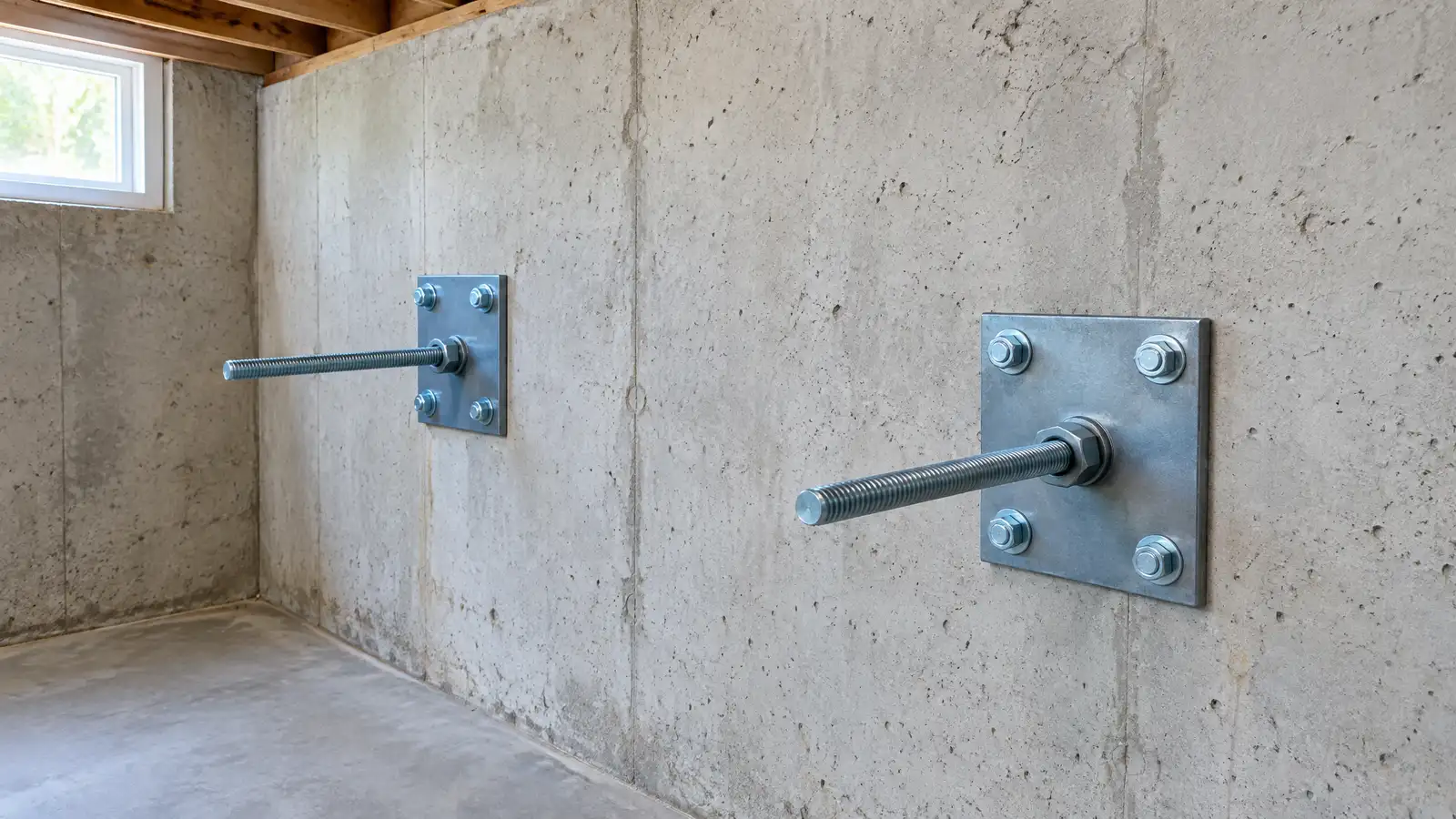
Steel anchors and braces that hold basement and foundation walls steady, tied to stable soil or to the floor structure.
Walls that push inward need something to push back. Wall anchors tie the wall to stable soil outside, and braces tie it to the floor above and the slab below. Both work like a strong hand holding the wall in place. They are popular in Nashville basements with block or poured walls that have started to lean or crack from wet-soil pressure.
For anchors, your specialist installs steel plates on the inside of the wall, drives rods through the wall to earth anchors placed in stable soil beyond the zone of pressure and tightens them over time to restrain or gently pull the wall. For braces, steel beams are fixed at the top and bottom of the wall to resist movement. Plans consider access, soil, yard features and finished space.
Anchors pull and hold from outside, while braces push back from inside, so each suits a different wall and site.
Anchors can be tightened gradually, which may bring a wall back a little while keeping stress controlled.
Plates and beams are installed from the basement, often with little disturbance to the yard.
Drainage and crack sealing usually go with the support so the wall faces less pressure.
Drag the handle to compare.
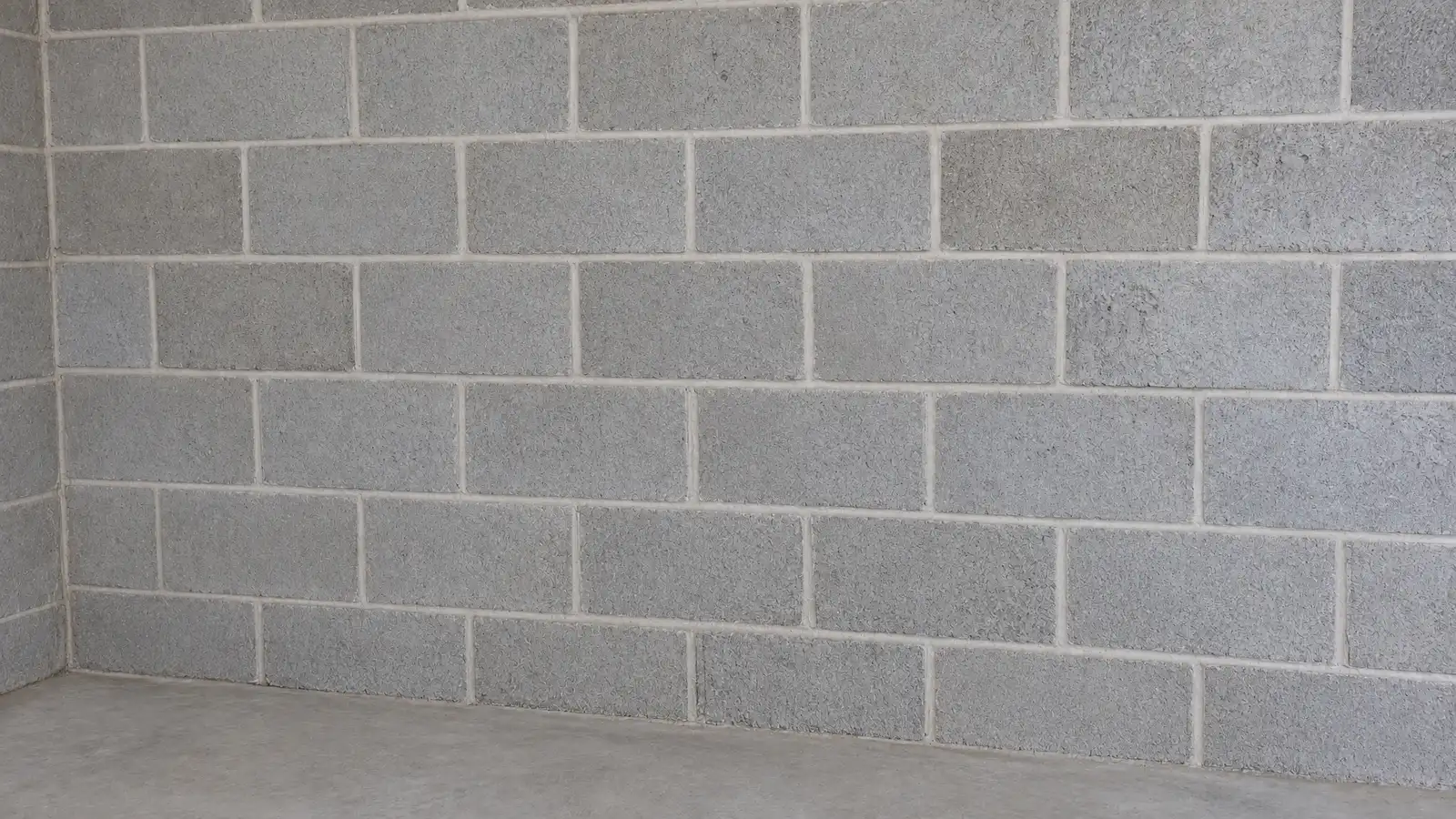
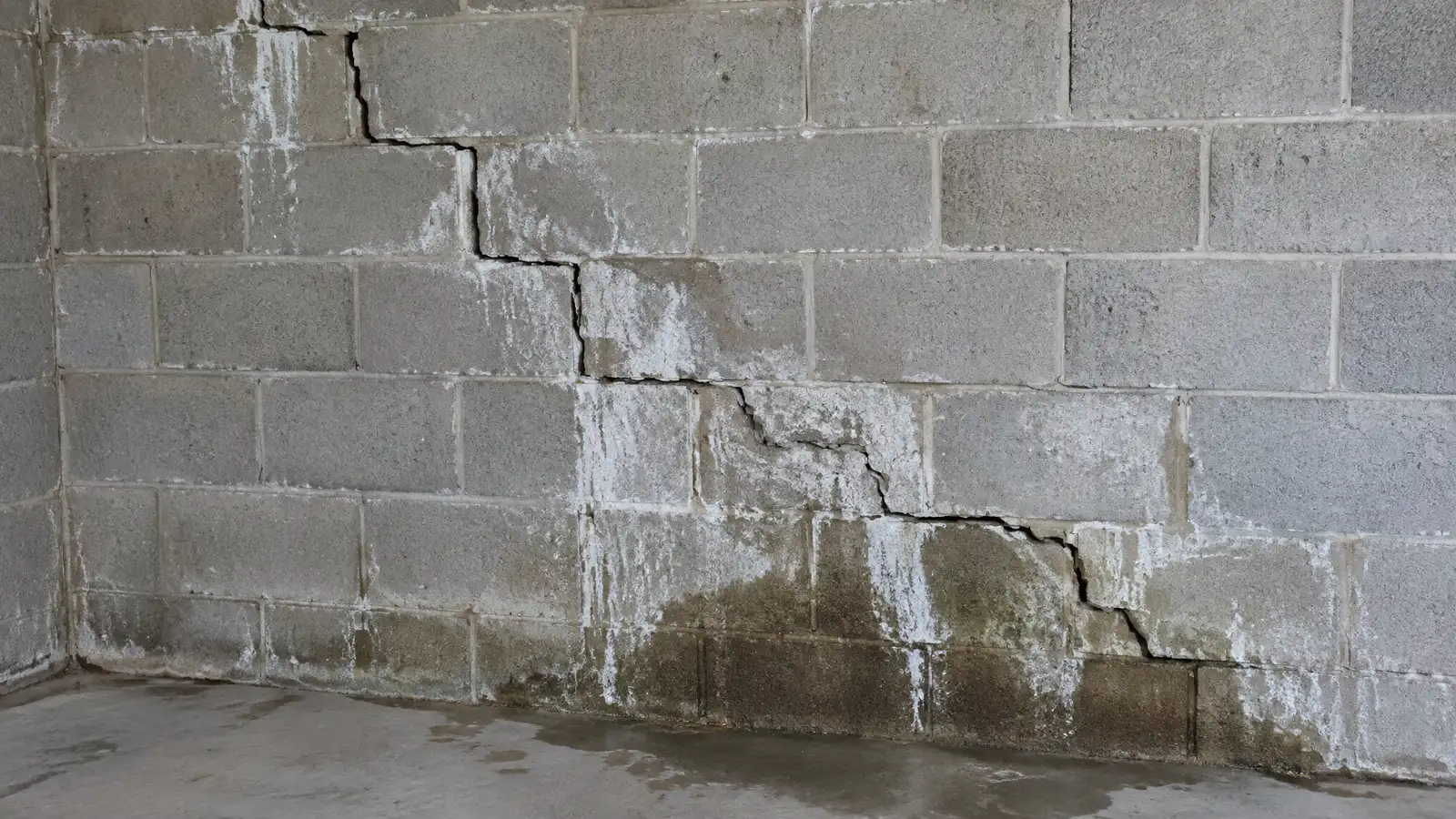 BeforeAfter
Movement and soil considered.
Fit to access and wall type.
Steel set on the wall.
Set outside or inside.
Tension adjusted.
Yard and wall finished.
Every topic has its own page with what to expect and how we approach it.
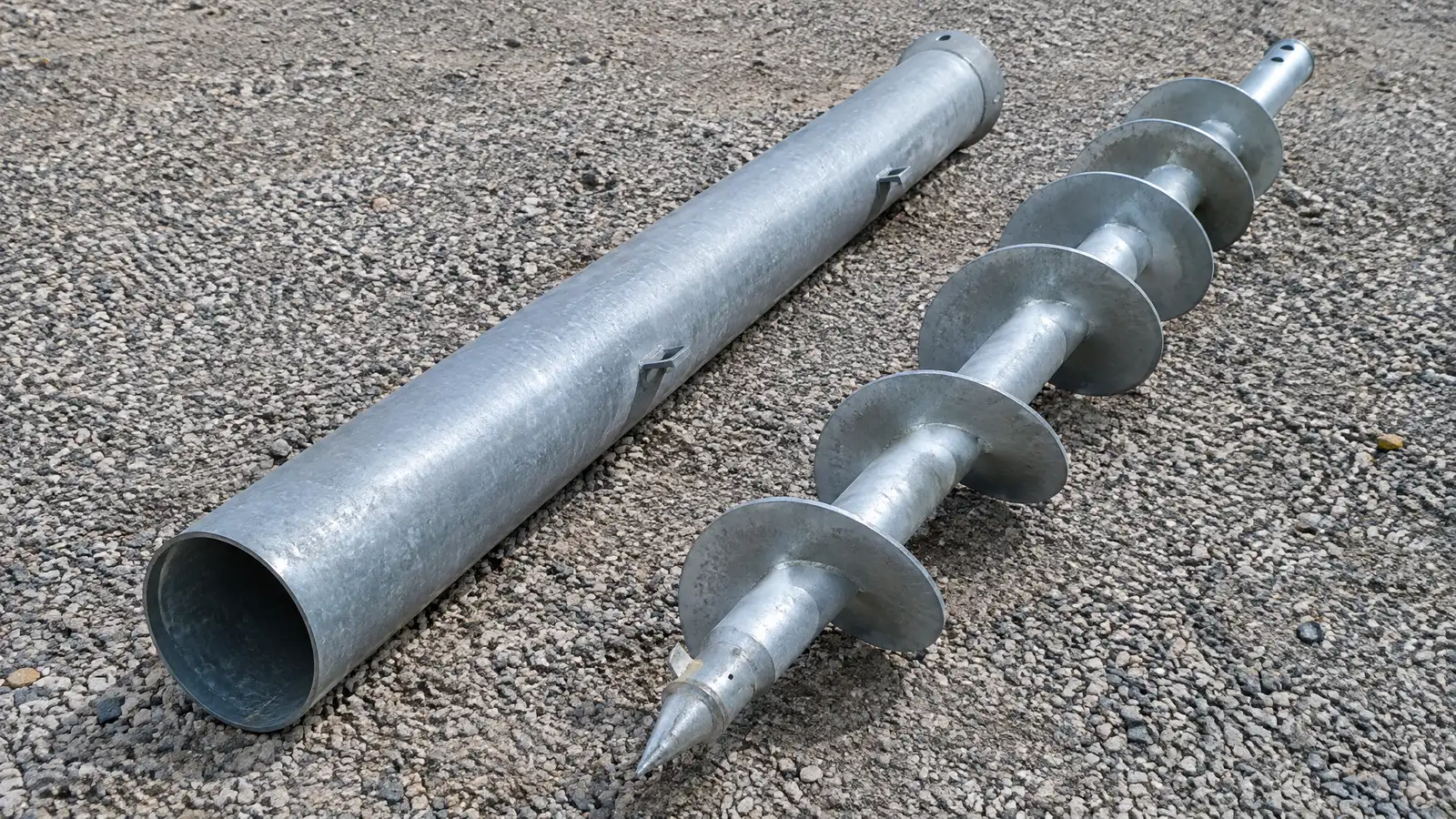 Comparison guidePush vs Helical PiersHow steel push piers and screw-in helical piers differ in how they are installed, what loads they suit…Learn more
 ResourceHubbell ChanceA maker of helical piles and anchors with technical manuals that explain how screw-in piles work and how…Learn more ResourceRam JackA maker of steel pier systems and tools used for foundation repair and stabilization, with educational information about…Learn more
Pick the project and options to see a typical sequence from estimate and engineering to utility marking, repair and cleanup.
You tell us what you see and where the property is. One call sets up a visit that fits your day.
A specialist walks the inside and outside, checks cracks, floors, moisture and drainage and takes measurements and photos.
You receive a plain written scope with the cause, the method, the location of each repair and the schedule before anything begins.
Utility marking is requested where digging is needed, access is protected and materials and any engineering are lined up.
Supports, drains, sealing or lifting are completed in a clear order, with photos and checks along the way.
The site is cleaned up, the work is explained on a walk-through and care and monitoring tips are shared.
They connect the wall to stable soil outside, so the wall is held and sometimes pulled back slowly as the anchors are tightened.
Most do, because an earth anchor is placed outside. Braces can be installed entirely from inside when yard access is limited.
Plates are visible on the wall, and some owners cover them with paint or a finish. Braces are more noticeable and often hidden in finished basements.
No. Straps, beams or rebuilding may suit some walls better, and your specialist compares them for you.
Many walls can be anchored in a day or two, depending on length and access.
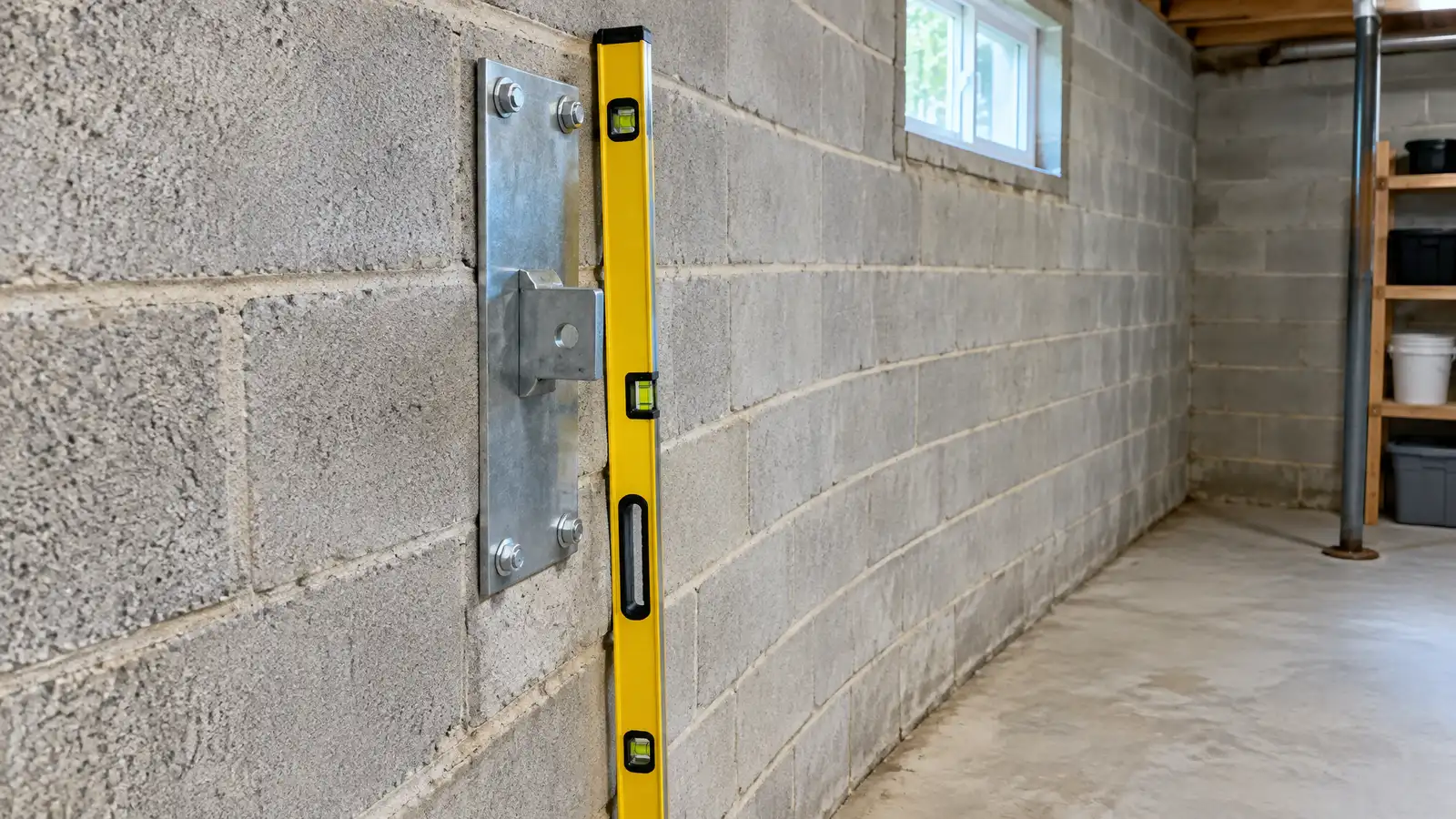 Bowing Basement Wall RepairStop and, where practical, straighten basement walls that bow or lean inward under pressure from wet soil.Explore
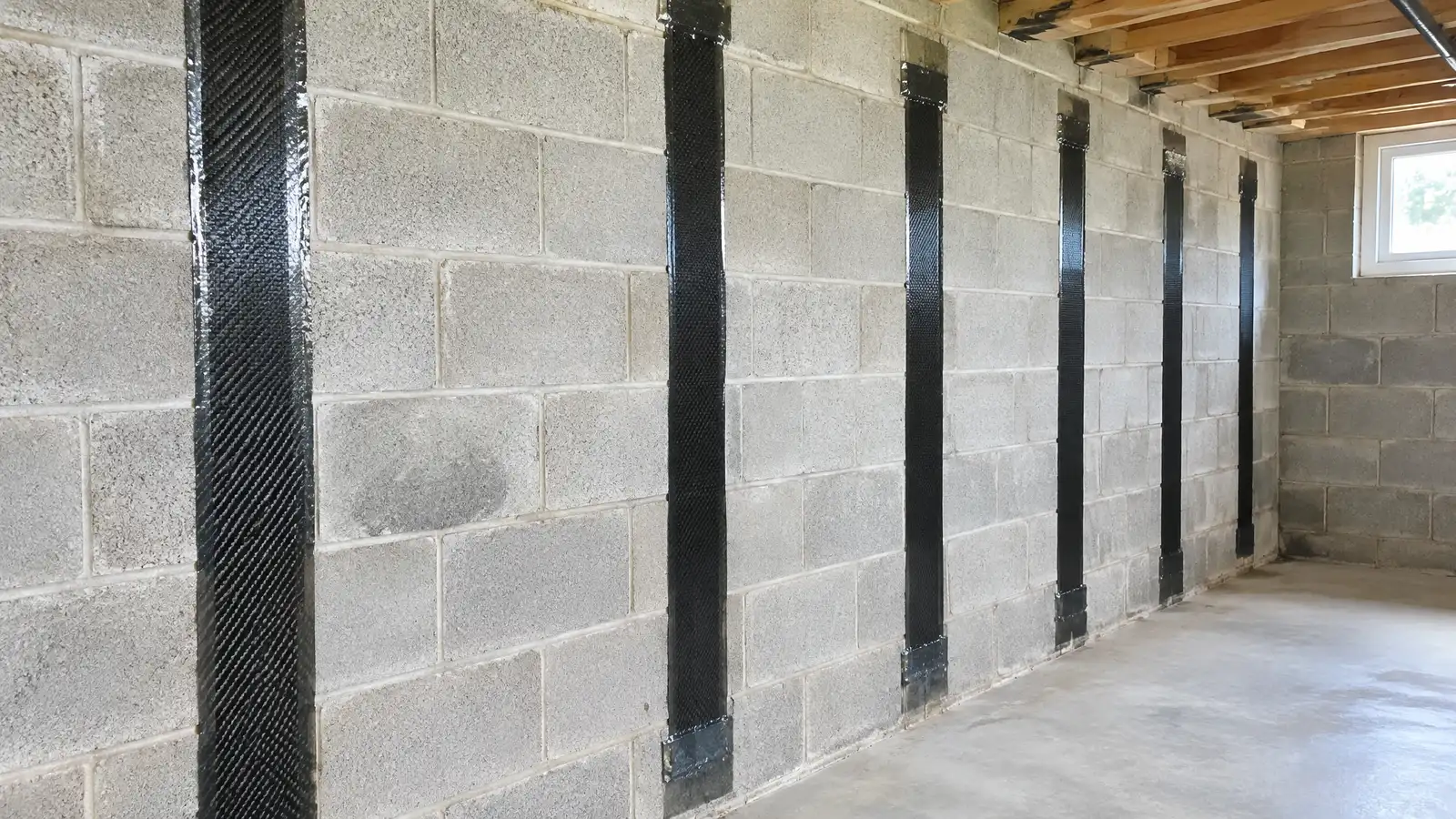 Carbon Fiber Wall ReinforcementThin, strong carbon fiber straps fixed to basement walls to stop slight bowing and reinforce cracked block or…Explore
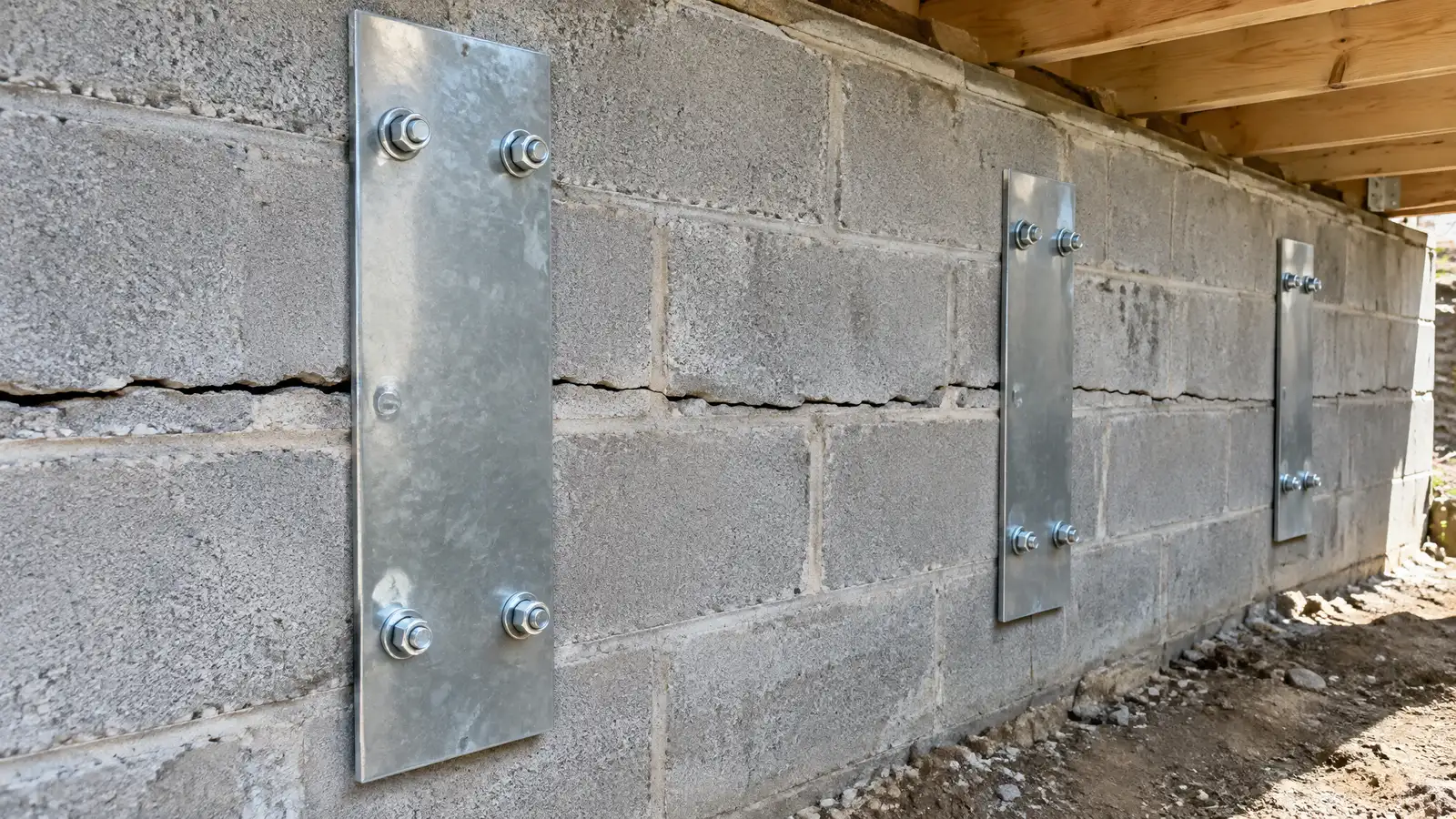 Block Foundation RepairRepairs for concrete block foundation walls with horizontal cracks, stair-step cracks, bowing or water seepage.Explore
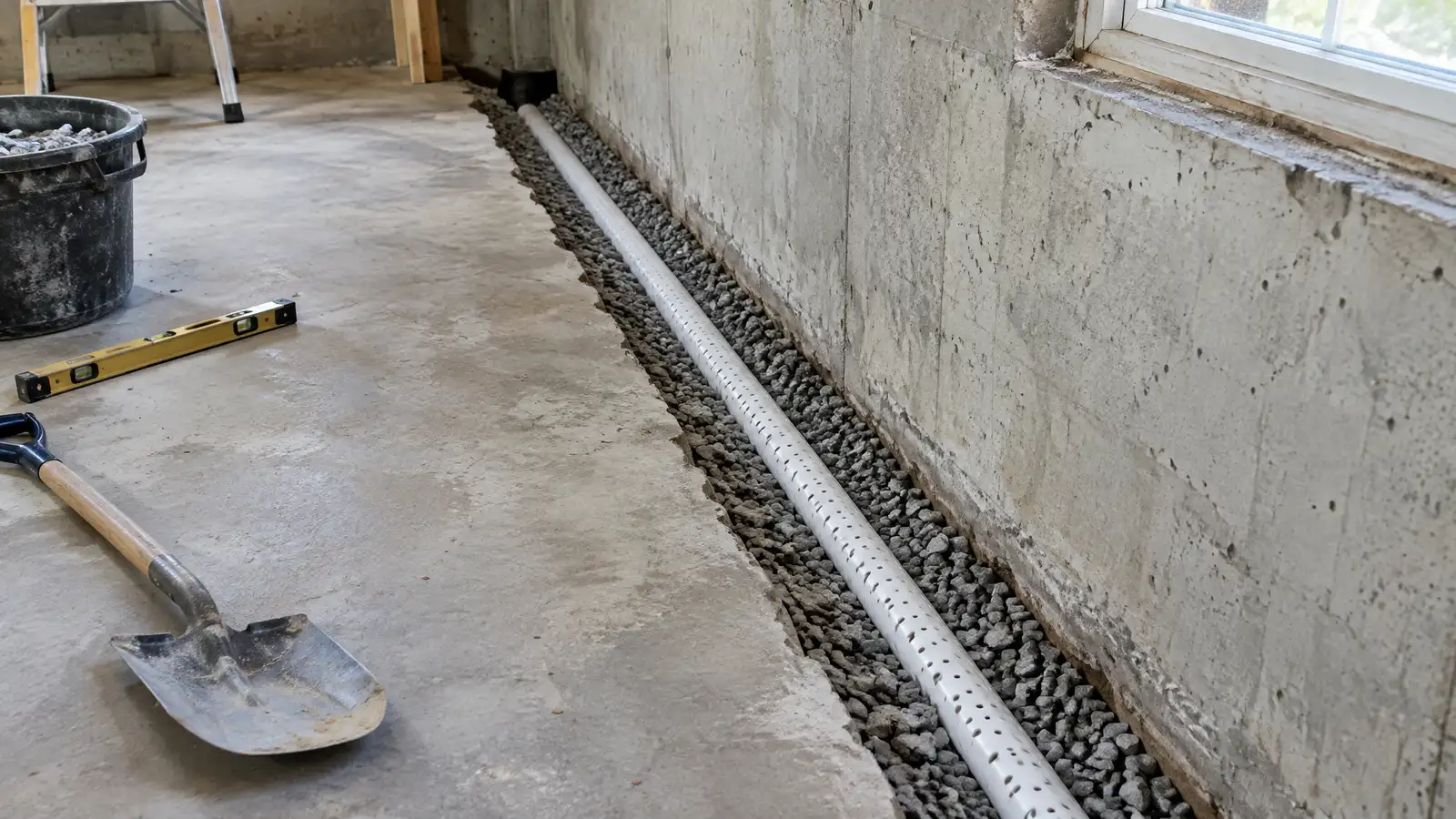 Interior Drainage SystemsPerimeter drains and sump systems inside a basement or crawl space that catch water and send it safely…Explore
Tell us about your property and one specialist will call you back to set up a visit.
Or call (615) 431-3789 to talk now.