Serving Nashville and Middle TennesseeFree Estimate
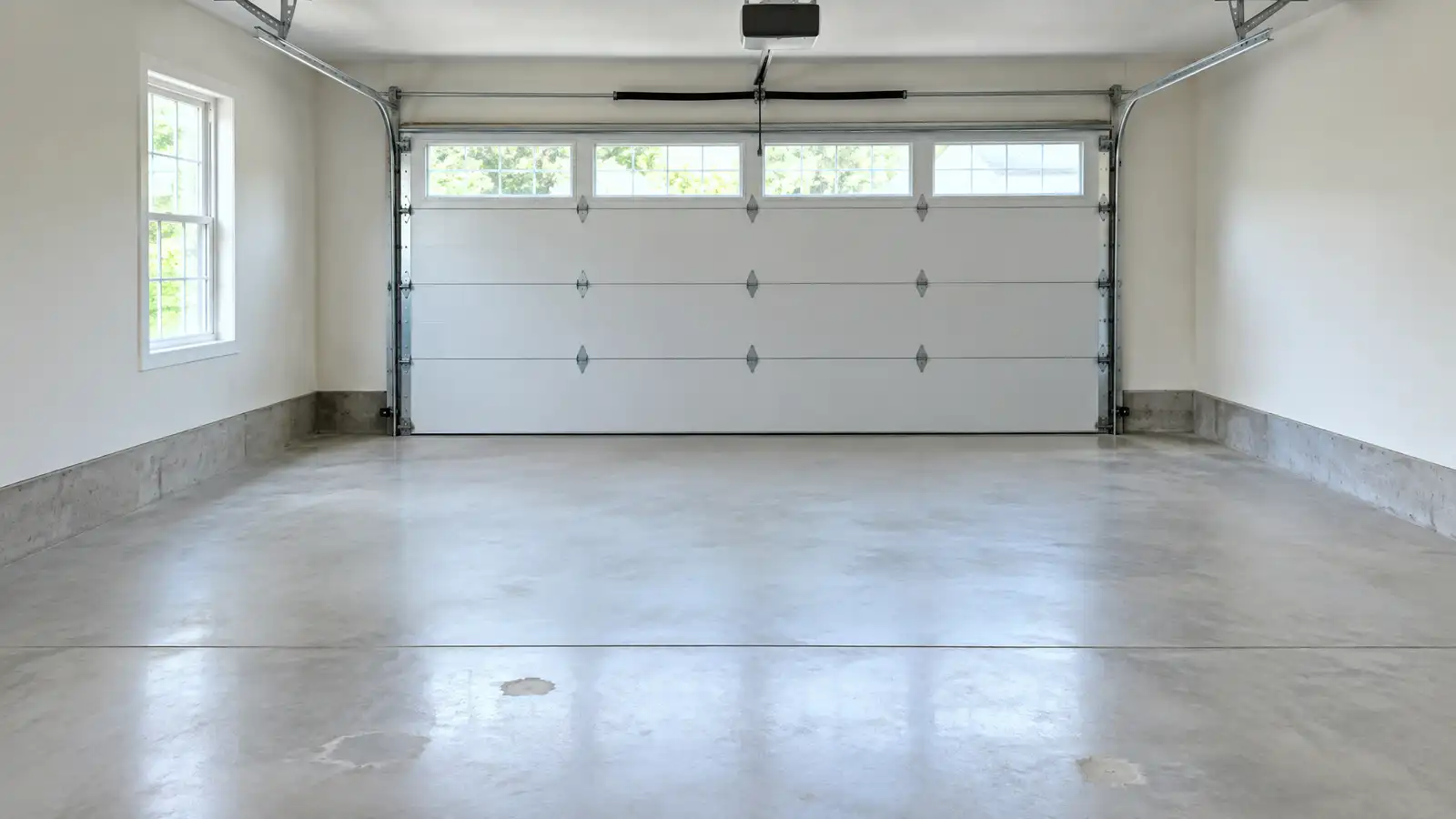
Raising sunken garage floors and aprons so they drain, meet the door and give vehicles a level place to park.
A garage floor that has dipped near the door or tilted toward a wall invites standing water and tracks mud into the house. Concrete in garages carries heavy loads and sits on soil that may have settled. Leveling brings the floor back where it belongs, and it can be done without removing the slab.
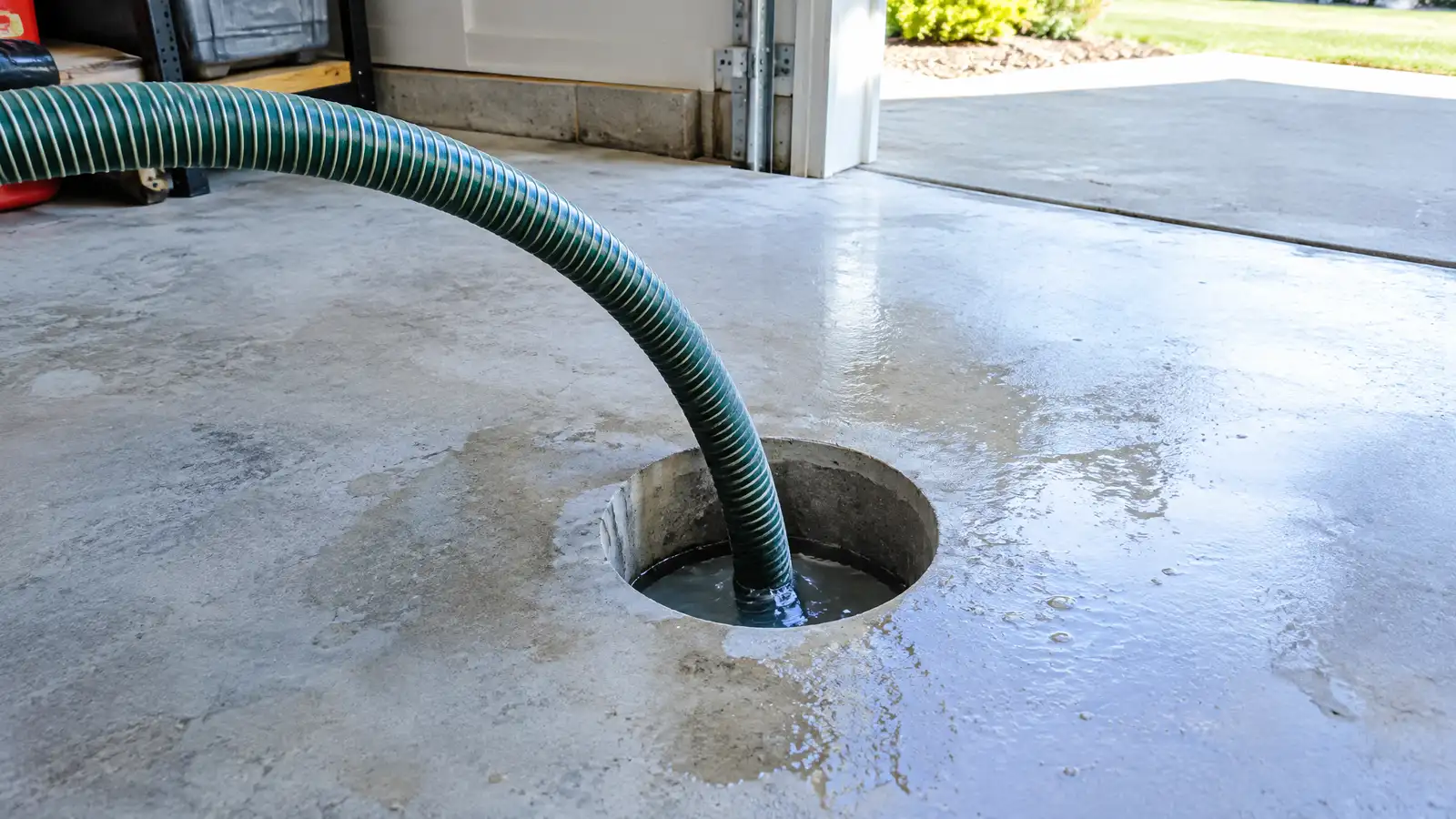
Your specialist maps the floor, finds voids and cracks and lifts the slab with foam or slurry from small holes. The apron where the garage meets the driveway is raised to meet the door seal, and cracks and joints are sealed. Drains and floor slope are checked so water exits instead of pooling. The garage door is checked after lifting to confirm it closes tightly. Take a moment to look at what drains toward your garage door. A downspout, a sloped driveway or a low area at the apron can send water in and slowly wash soil from under the slab. Fixing that source during leveling is what keeps the floor from dropping again, and your specialist can show you simple ways to keep runoff moving away from the doorway.
Readings show which parts sank, and the lift is planned to bring the whole floor back toward level.
Raising the apron lets the bottom seal meet the floor again, keeping out water, leaves and pests.
Sealing prevents water and salts from seeping beneath the slab.
Slope toward the door or a floor drain is checked, so water leaves the garage instead of standing.
Drag the handle to compare.
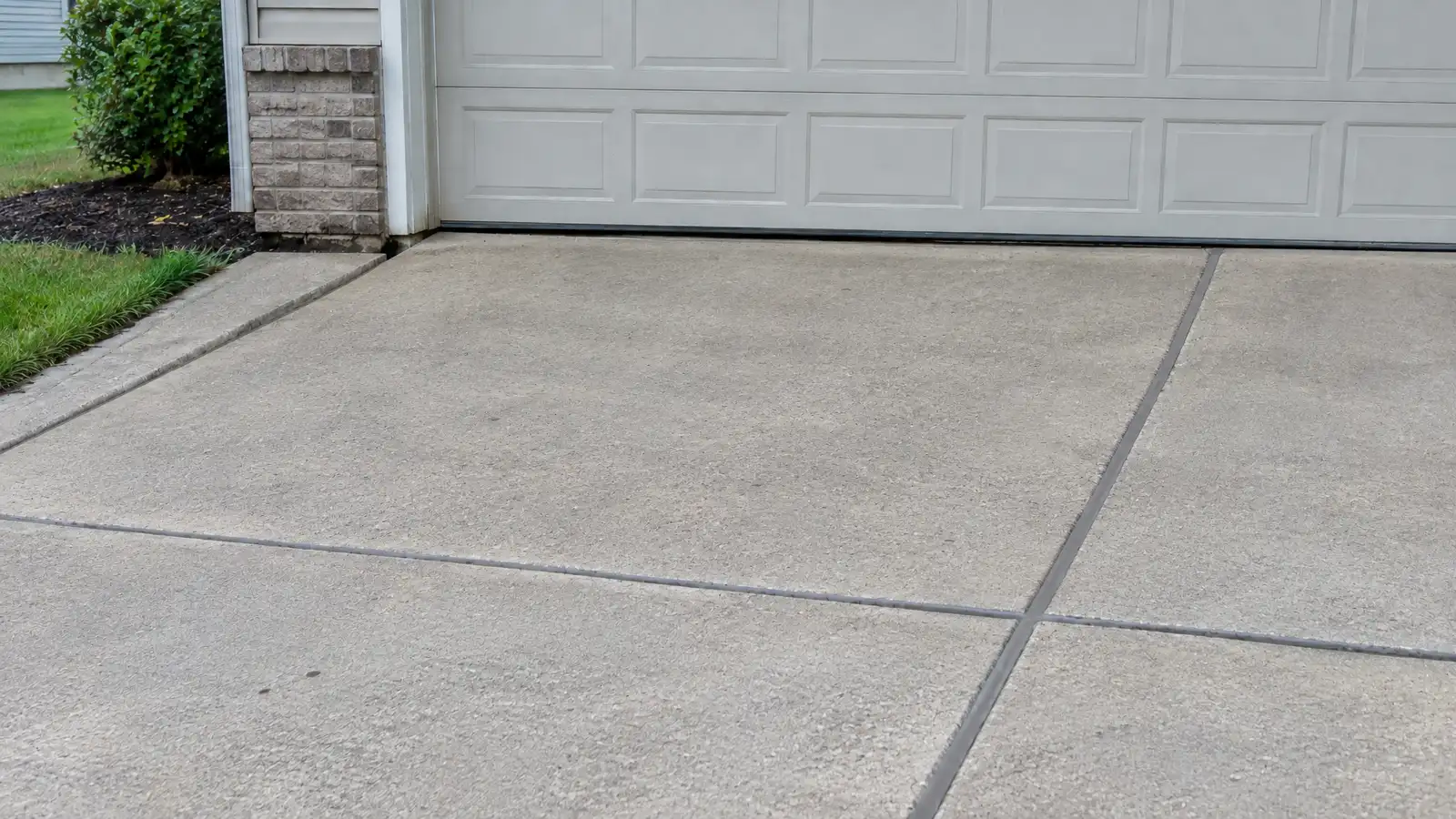
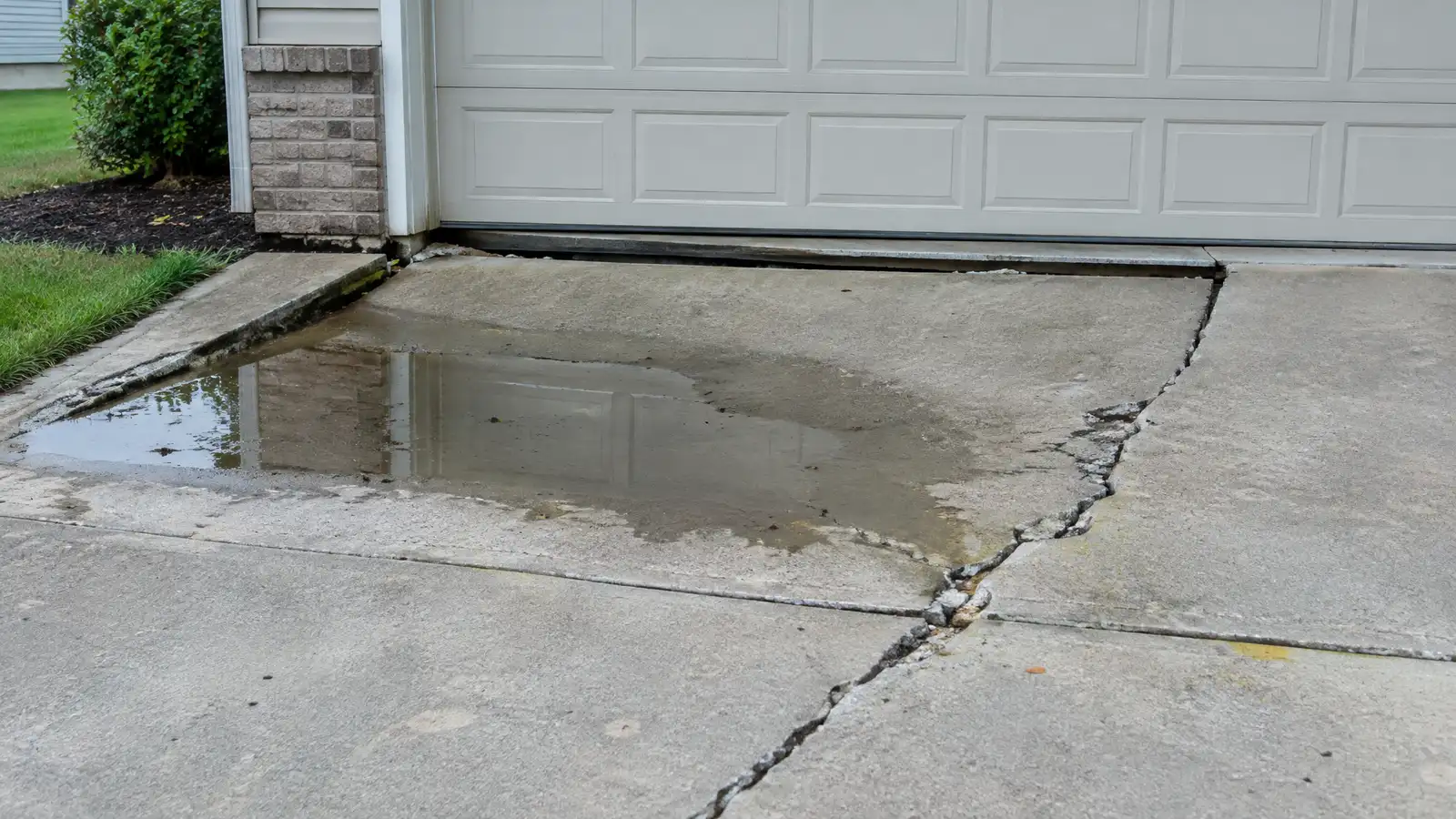 BeforeAfter
Heights and slopes recorded.
Under the slab.
Foam or slurry.
Door seal met.
Water kept out.
Closing and seal checked.
Every topic has its own page with what to expect and how we approach it.
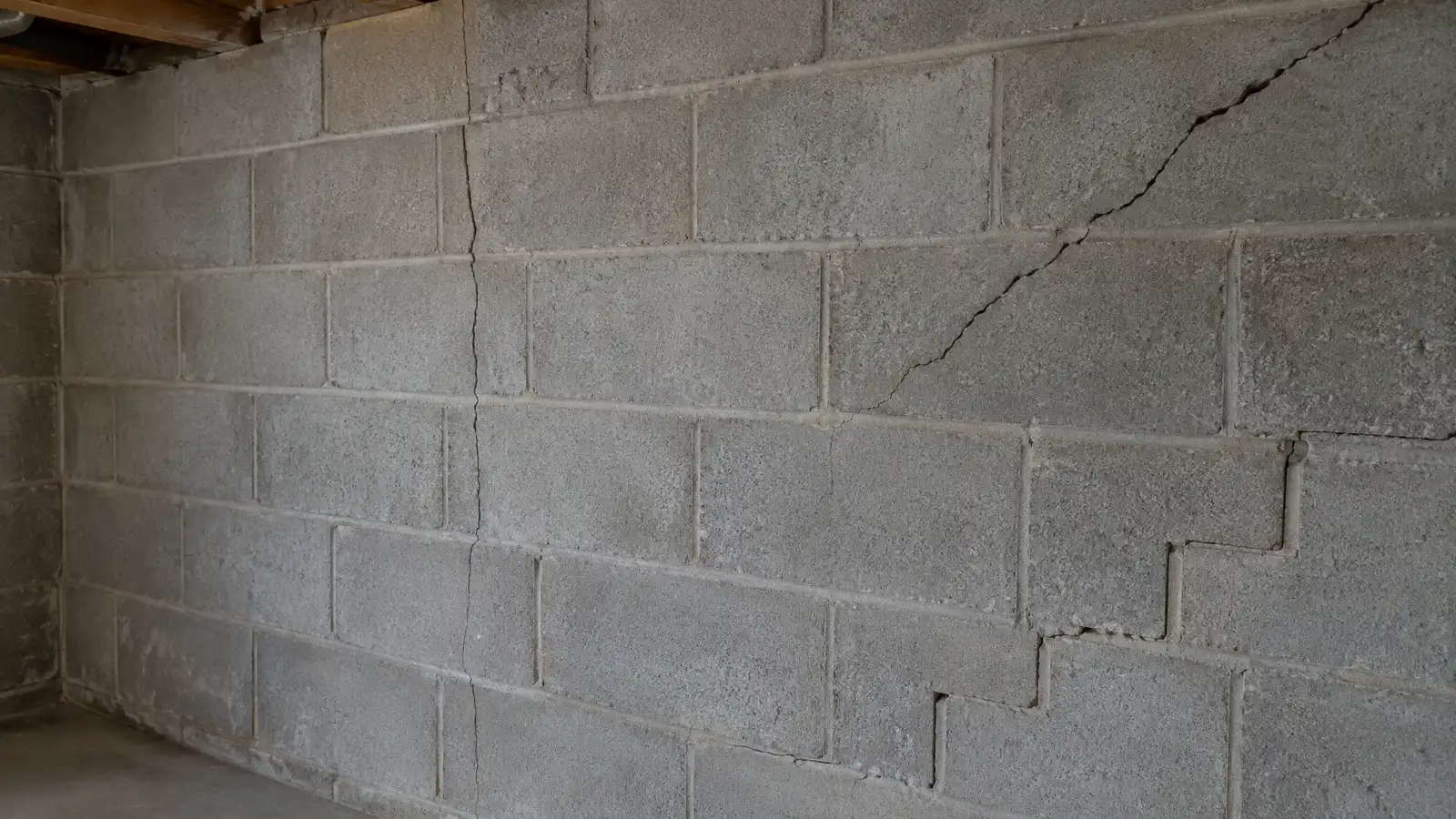 Comparison guideCrack TypesHow hairline, vertical, diagonal, stair-step and horizontal cracks differ in what they usually mean and what to do…Learn more
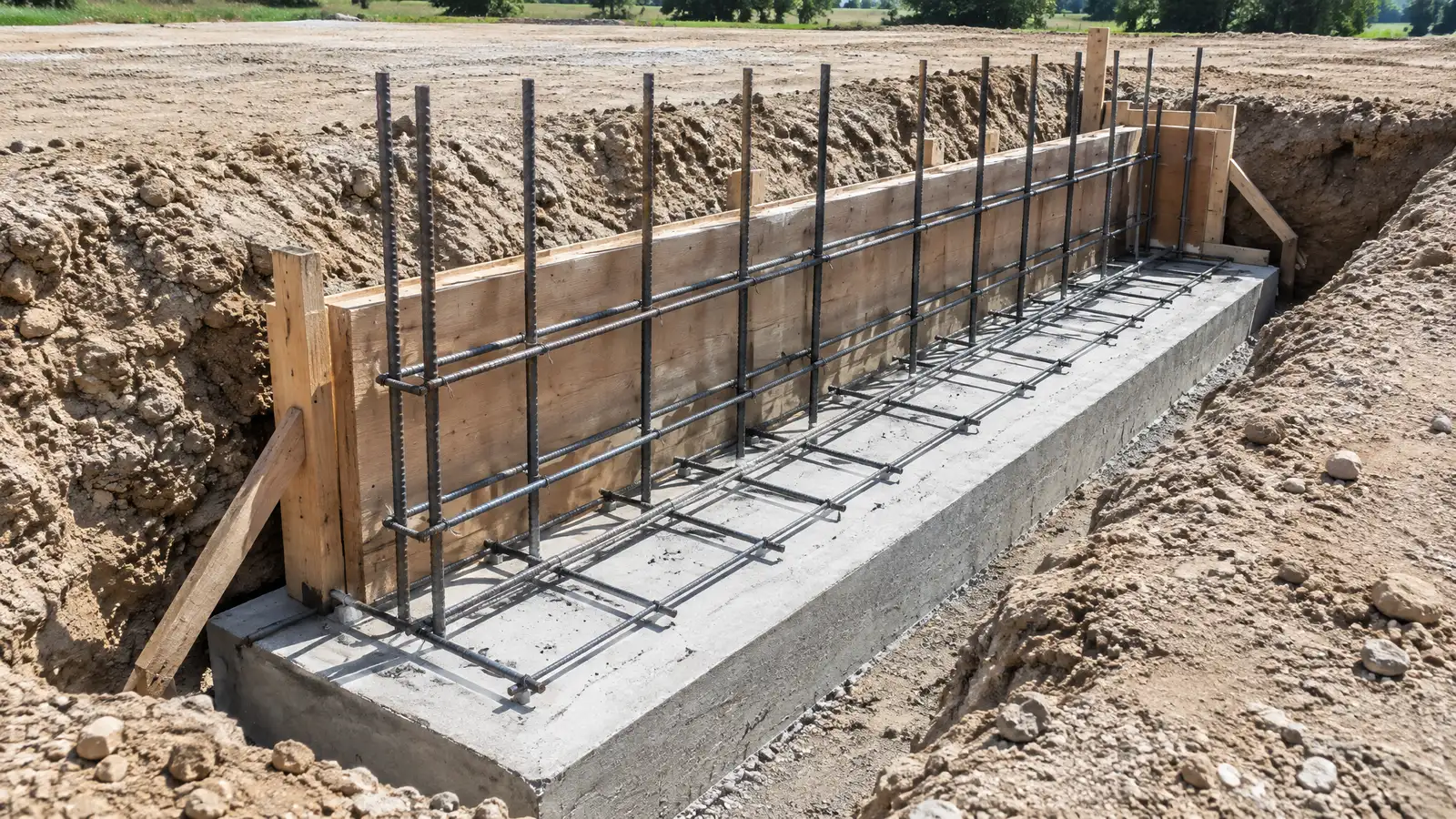 Comparison guideFootings and Stem WallsHow footings spread a building's load into the soil, how stem walls rise from them and what depth…Learn more
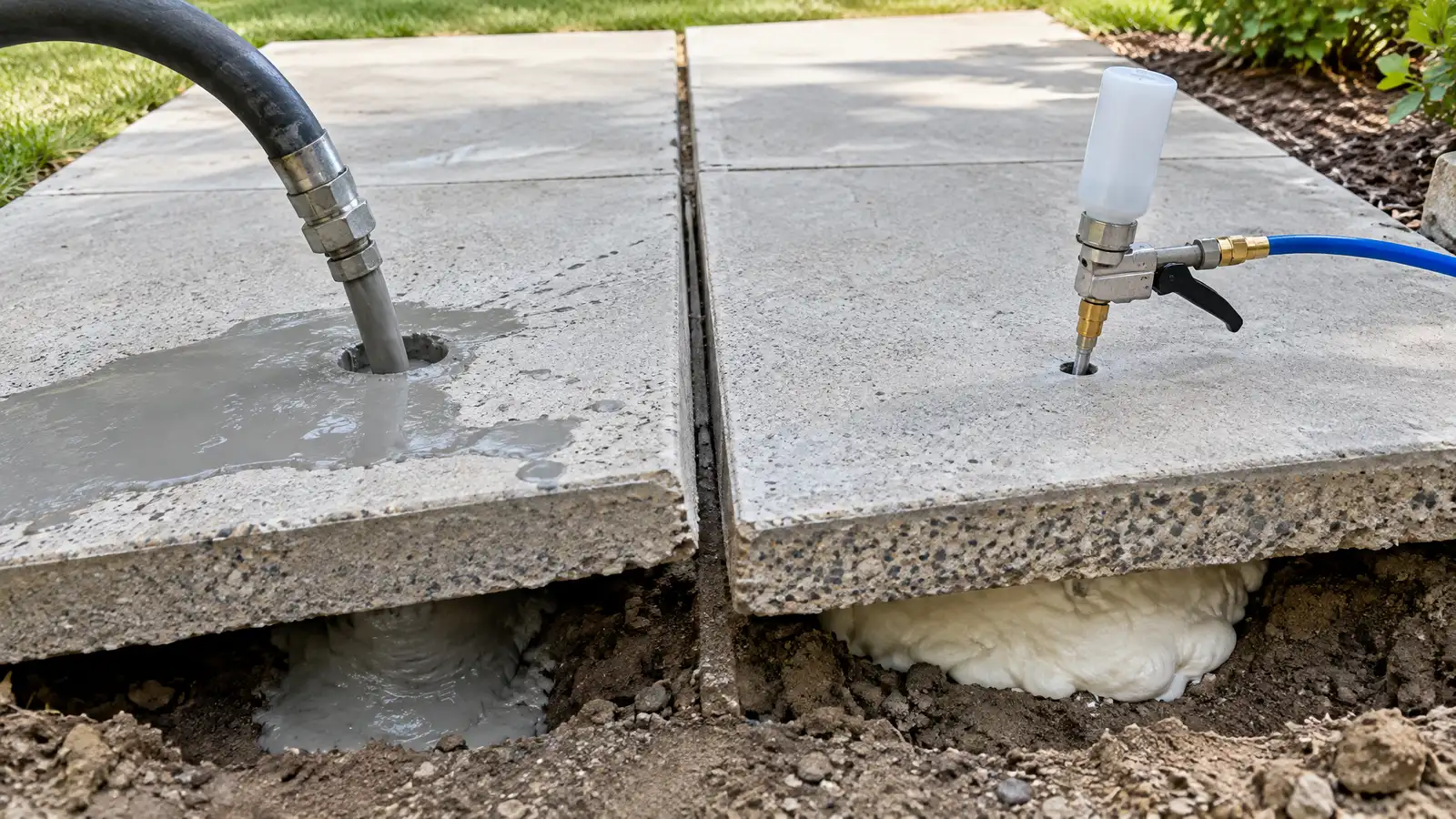 Comparison guideSlabjacking vs FoamHow cement slurry mudjacking and polyurethane foam differ in weight, hole size, curing time, use and fit for…Learn more
Enter your measurements to see piers, crack length, drain footage, crawl space liner area and slab area to plan for.
You tell us what you see and where the property is. One call sets up a visit that fits your day.
A specialist walks the inside and outside, checks cracks, floors, moisture and drainage and takes measurements and photos.
You receive a plain written scope with the cause, the method, the location of each repair and the schedule before anything begins.
Utility marking is requested where digging is needed, access is protected and materials and any engineering are lined up.
Supports, drains, sealing or lifting are completed in a clear order, with photos and checks along the way.
The site is cleaned up, the work is explained on a walk-through and care and monitoring tips are shared.
Often yes, using foam or slurry. The slab must be sound enough to lift.
Lifting can restore slope so water drains out, and a floor drain or sealing may also help.
Clearing the floor makes the work faster, and your specialist explains how much space is needed.
Fill and lifted slabs can support normal vehicle loads. Your specialist explains the load rating for the material used.
Foam cures quickly, and slurry takes a little longer. Your specialist gives you timing for the product used.
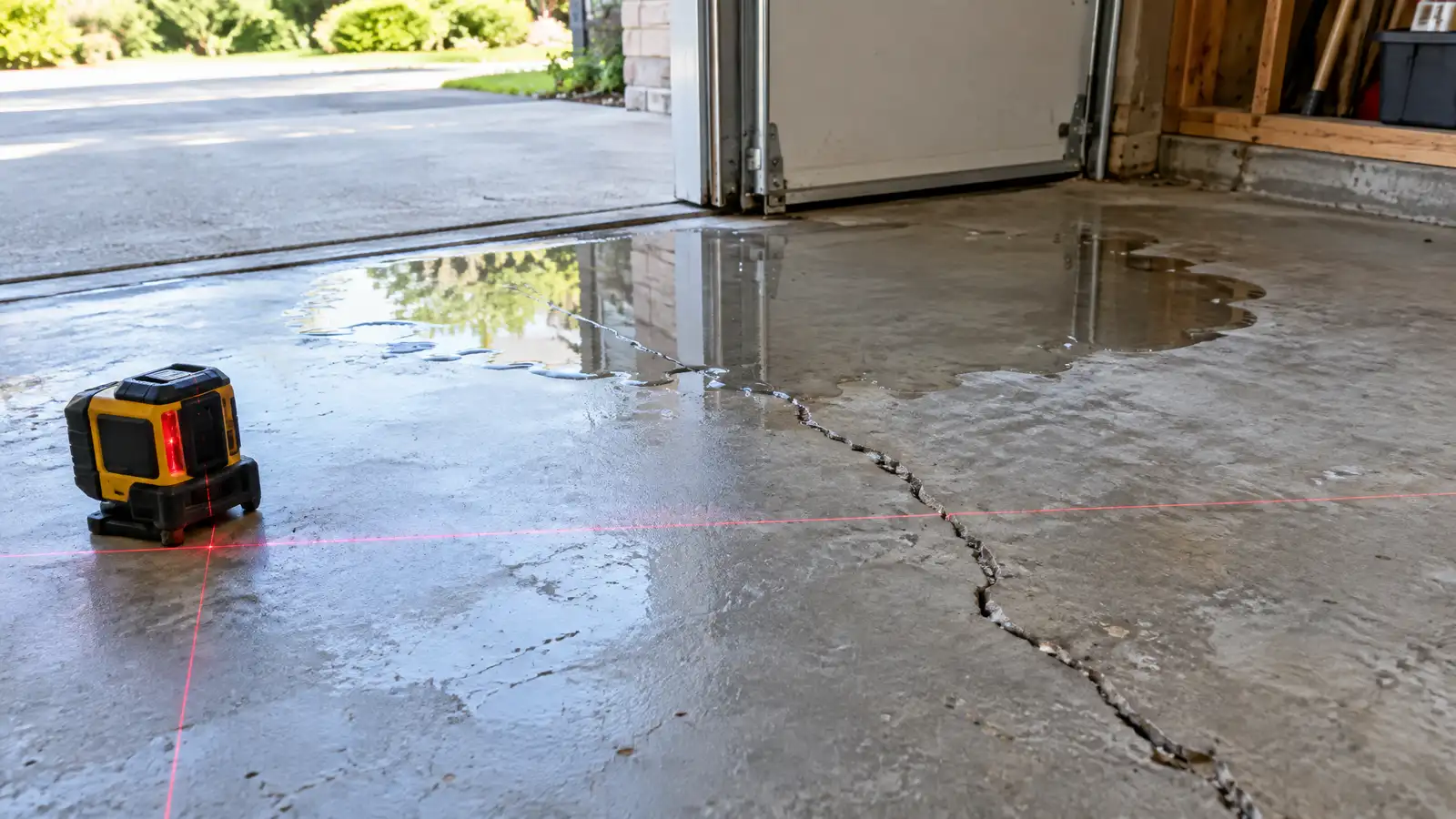 Garage Foundation RepairRepairs for garage slabs and footings that crack, tilt or sink, so doors close, floors drain and vehicles…Explore
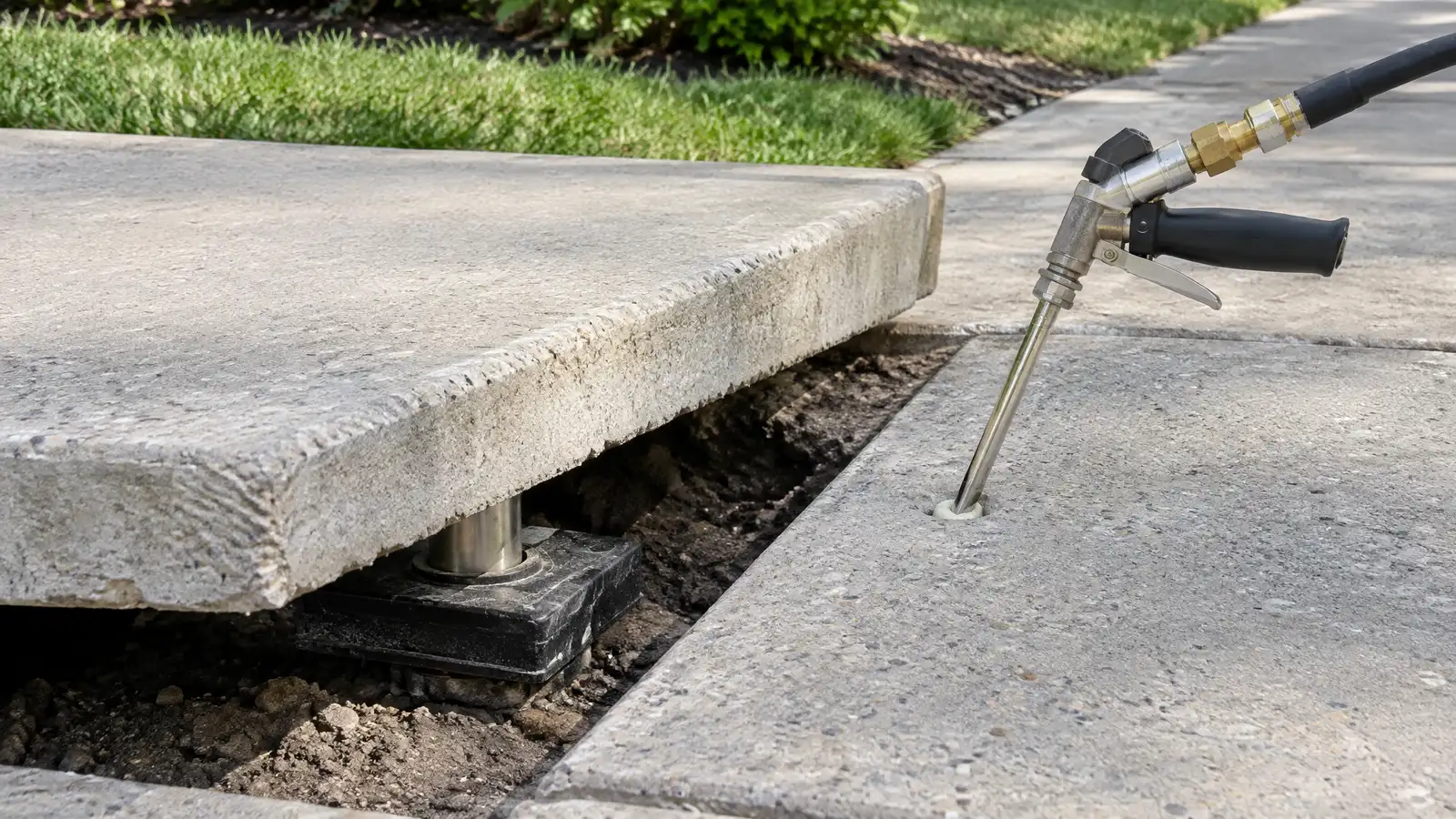 Polyurethane Foam Concrete LiftingLightweight expanding foam injected under sunken concrete to fill voids, lift the slab and stabilize it with minimal…Explore
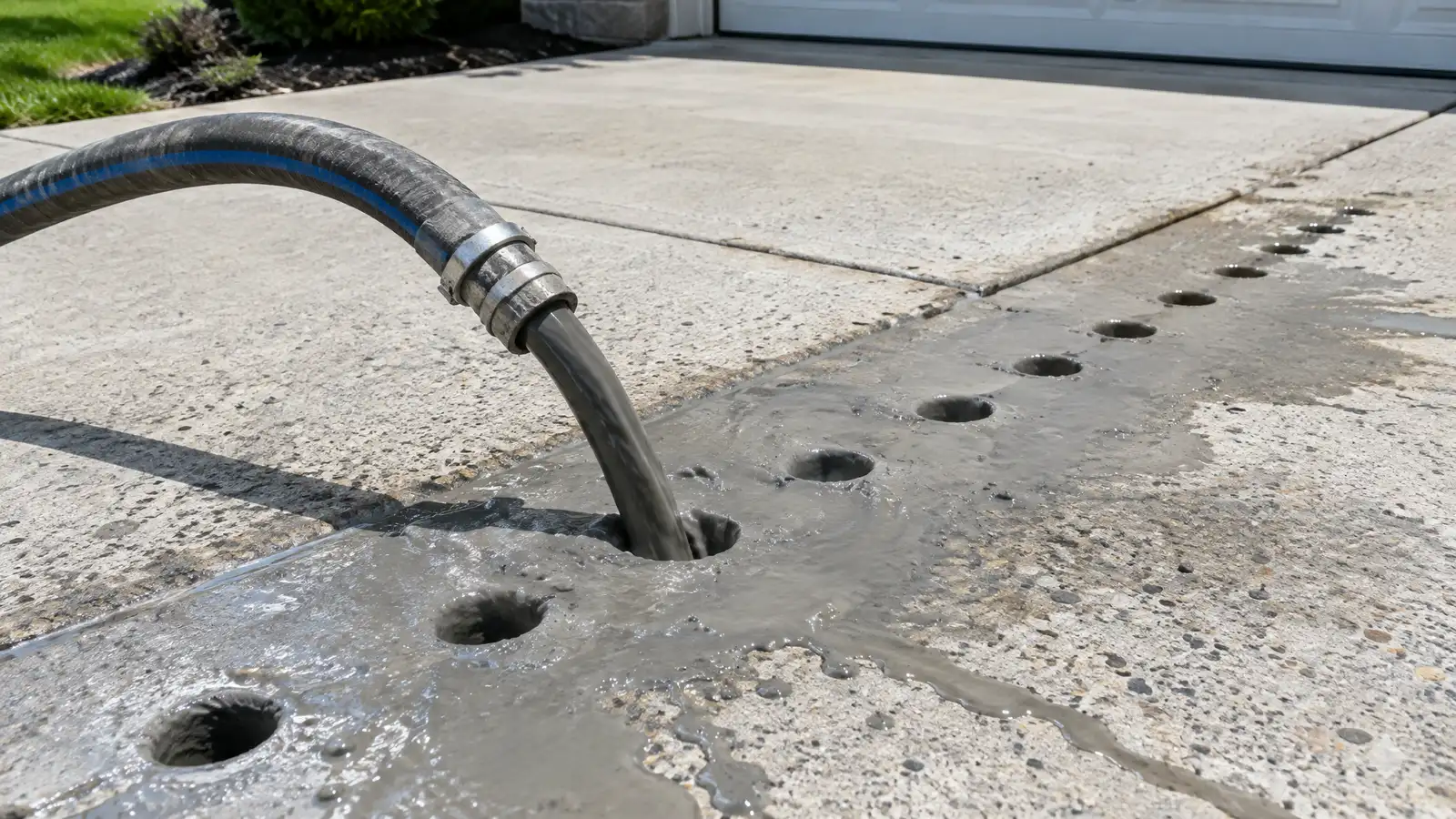 Slabjacking and MudjackingLifting sunken concrete slabs by pumping a cement-based slurry through small holes to fill voids and raise the…Explore
 Void Filling Under SlabsFinding and filling hidden gaps beneath concrete floors, steps, garages and slabs to restore support.Explore
Tell us about your property and one specialist will call you back to set up a visit.
Or call (615) 431-3789 to talk now.