Serving Nashville and Middle TennesseeFree Estimate
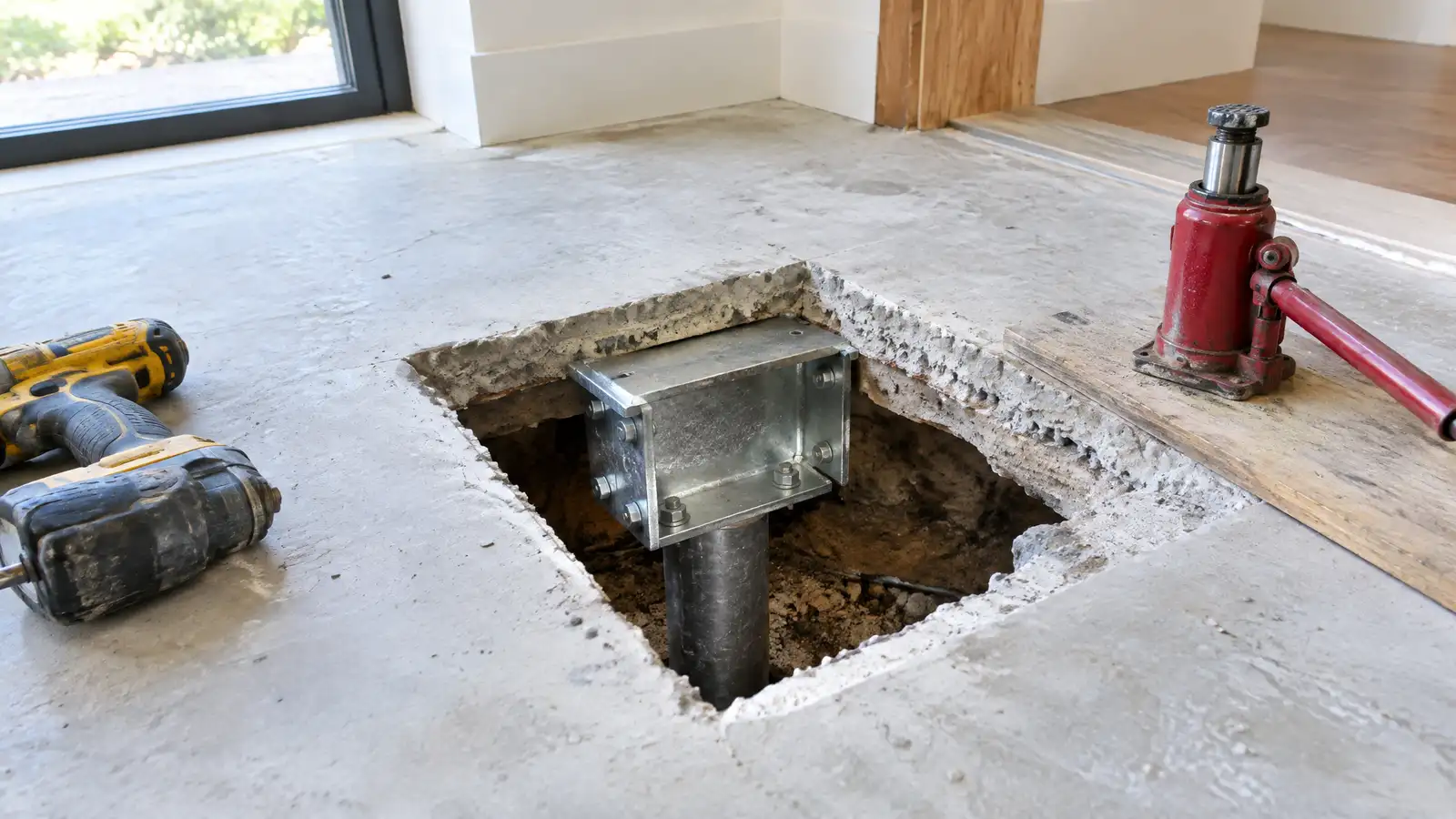
Piers installed through or beside a concrete slab to lift and support a sinking interior floor without tearing the house apart.
A concrete slab floor can sink when soil under it settles, washes out or was poorly compacted. The first sign is often a crack in tile, a gap at a door or a floor that rolls underfoot. Slab piers reach below the weak soil and carry the slab, so the floor can be lifted and held. Nashville owners with slab homes and additions often turn to them when other fixes will not hold.
Your specialist maps the floor slope, then plans pier locations along the slab or through small openings cut in the concrete. Piers are installed to firm support, the slab is lifted gradually toward level and the openings are patched. Where cracks are present, they are sealed, and drainage or grading changes are suggested to keep water from washing out the soil again.
Piers pass through the soft layer to firm support, so the slab rests on something that will not keep moving.
Elevation readings show where the slab has dropped and how much lift is needed, so work follows evidence.
Where piers go through the slab, the openings are modest and patched in a way that blends with the floor.
Fixing the source of soil loss, such as a leak or poor drainage, protects the repair for the long run.
Drag the handle to compare.
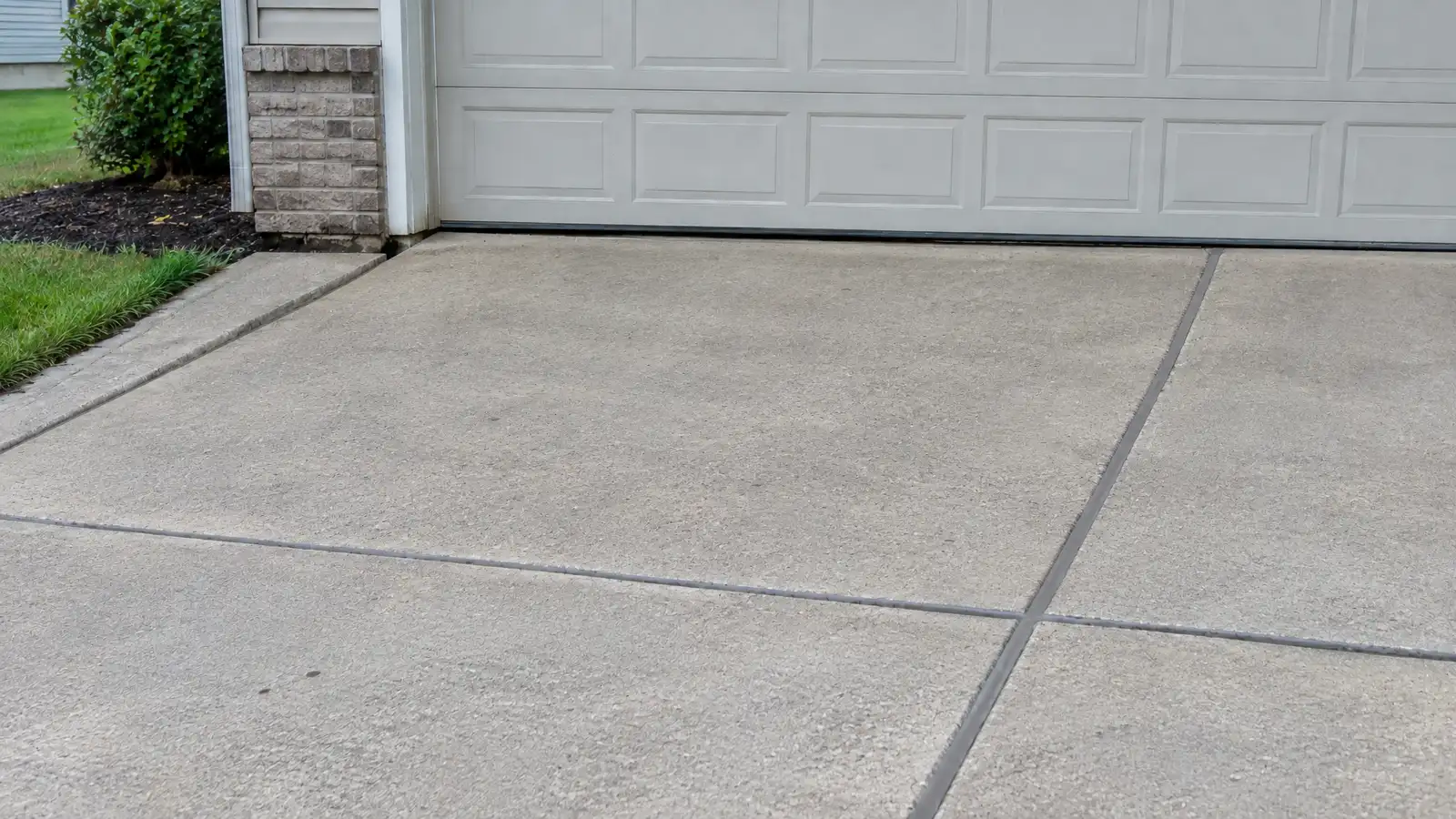
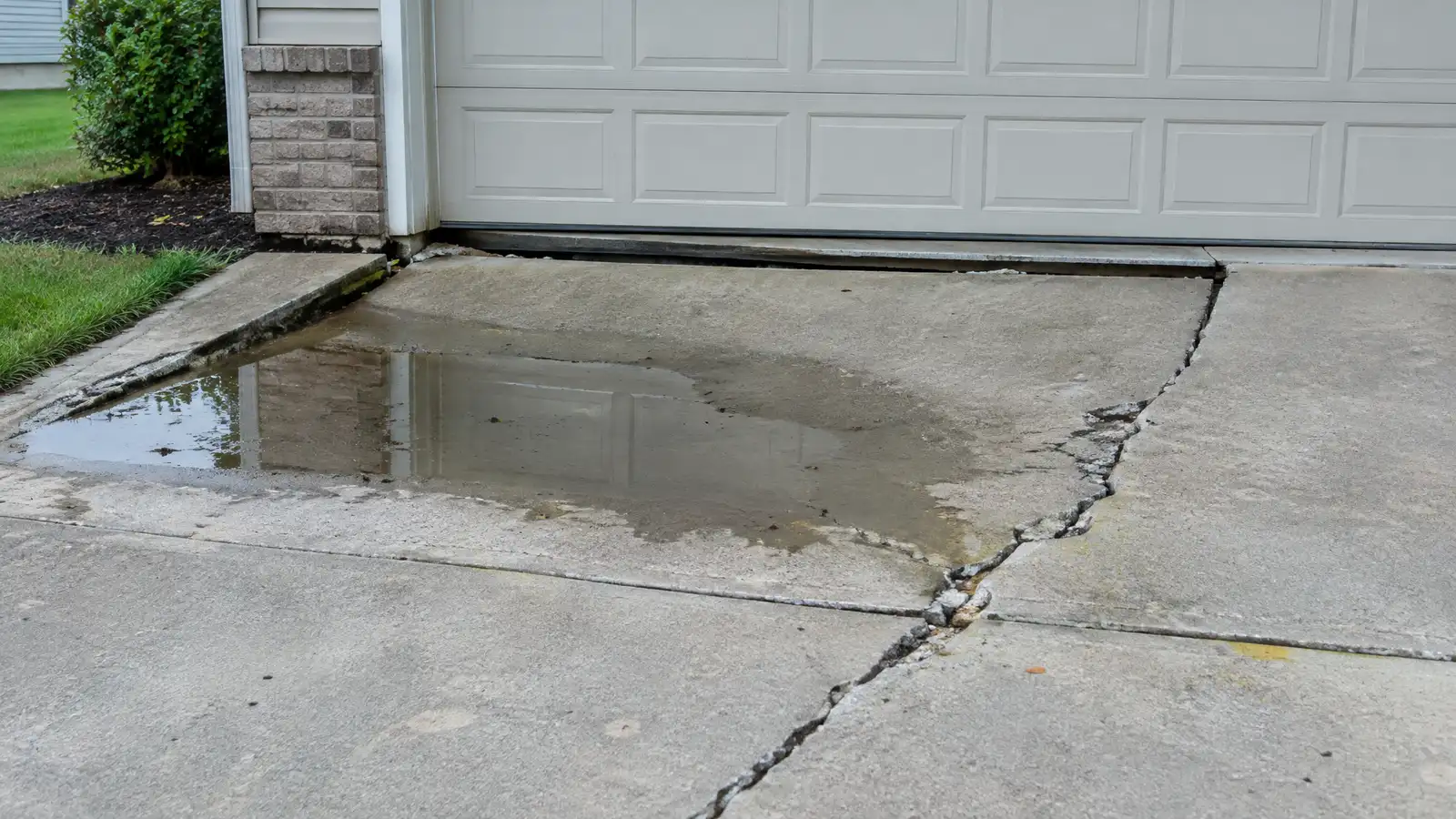 BeforeAfter
Elevation readings taken.
Along or through the slab.
Piers driven or placed.
Raised toward level in steps.
Openings and cracks finished.
Final readings and care tips.
Every topic has its own page with what to expect and how we approach it.
 ResourceASCEA professional society for civil engineers that publishes standards, research and public information on structures, soils and infrastructure.Learn more
 ResourceSimpson Strong-TieA maker of structural connectors, anchors and fasteners used in framing, concrete and masonry, with engineering resources.Learn more ResourceSikaA global maker of construction chemicals, including crack injection resins, waterproofing and concrete repair materials.Learn more
Pick your foundation type, home age and the signs you see to learn how urgent they usually are and what to do next.
You tell us what you see and where the property is. One call sets up a visit that fits your day.
A specialist walks the inside and outside, checks cracks, floors, moisture and drainage and takes measurements and photos.
You receive a plain written scope with the cause, the method, the location of each repair and the schedule before anything begins.
Utility marking is requested where digging is needed, access is protected and materials and any engineering are lined up.
Supports, drains, sealing or lifting are completed in a clear order, with photos and checks along the way.
The site is cleaned up, the work is explained on a walk-through and care and monitoring tips are shared.
Often the slab can be lifted from below with minimal disturbance to finishes, though some tile or flooring may need repair after the lift.
Poor compaction, washed-out soil, leaking pipes, drainage problems and soil that dries and shrinks can all play a part.
No. Piers carry the slab on deep supports, while slabjacking fills voids under it with material. A specialist can explain which fits your case.
Lifting can reduce some cracks, and remaining cracks can be sealed. Results depend on the slab and the cause.
Plumbing in or under the slab is considered in the plan, and lifting is done carefully to protect it.
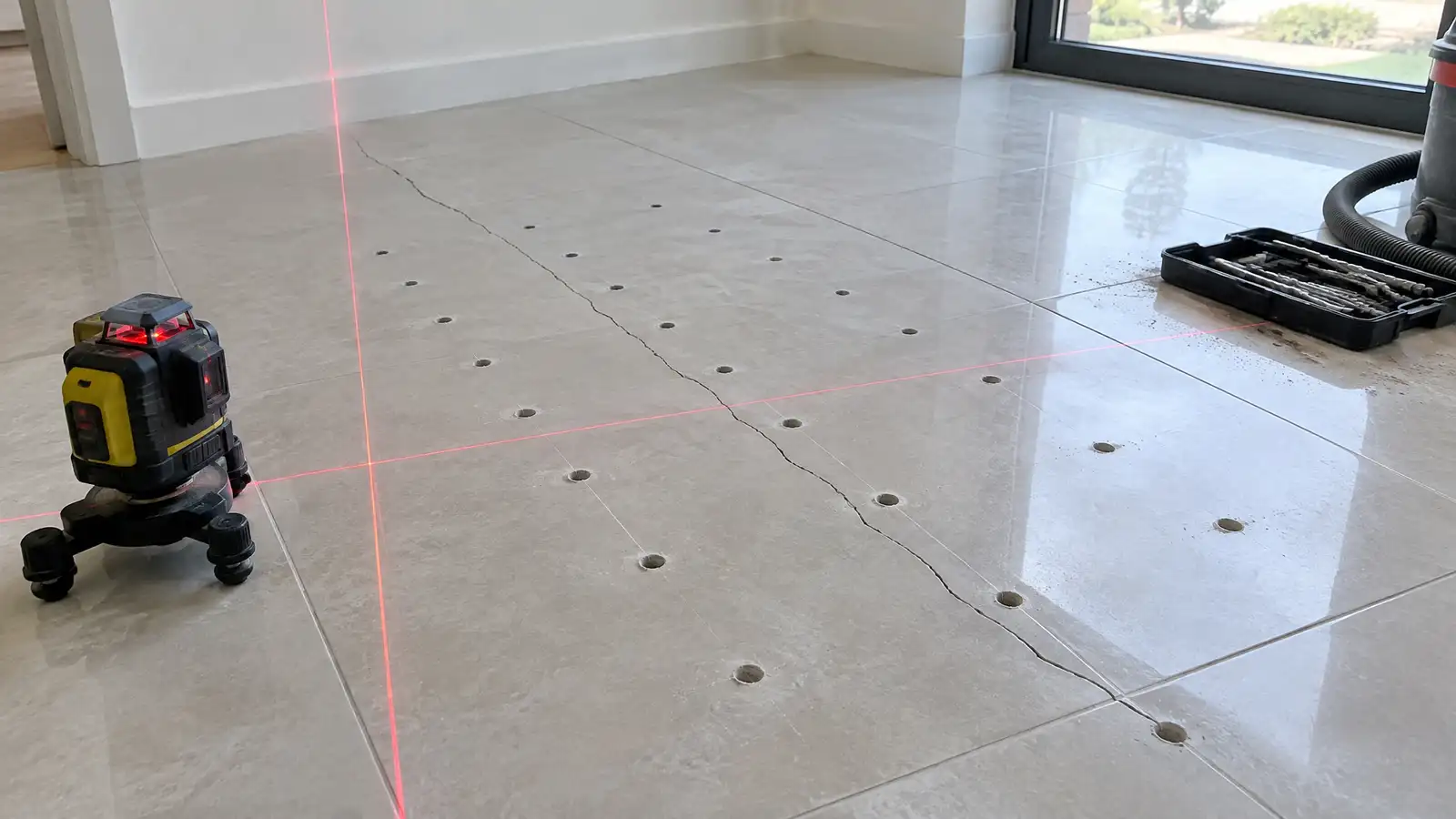 Slab Foundation RepairRepairs for cracked, sunken or heaved concrete slab foundations, using support, lifting and moisture control to restore a…Explore
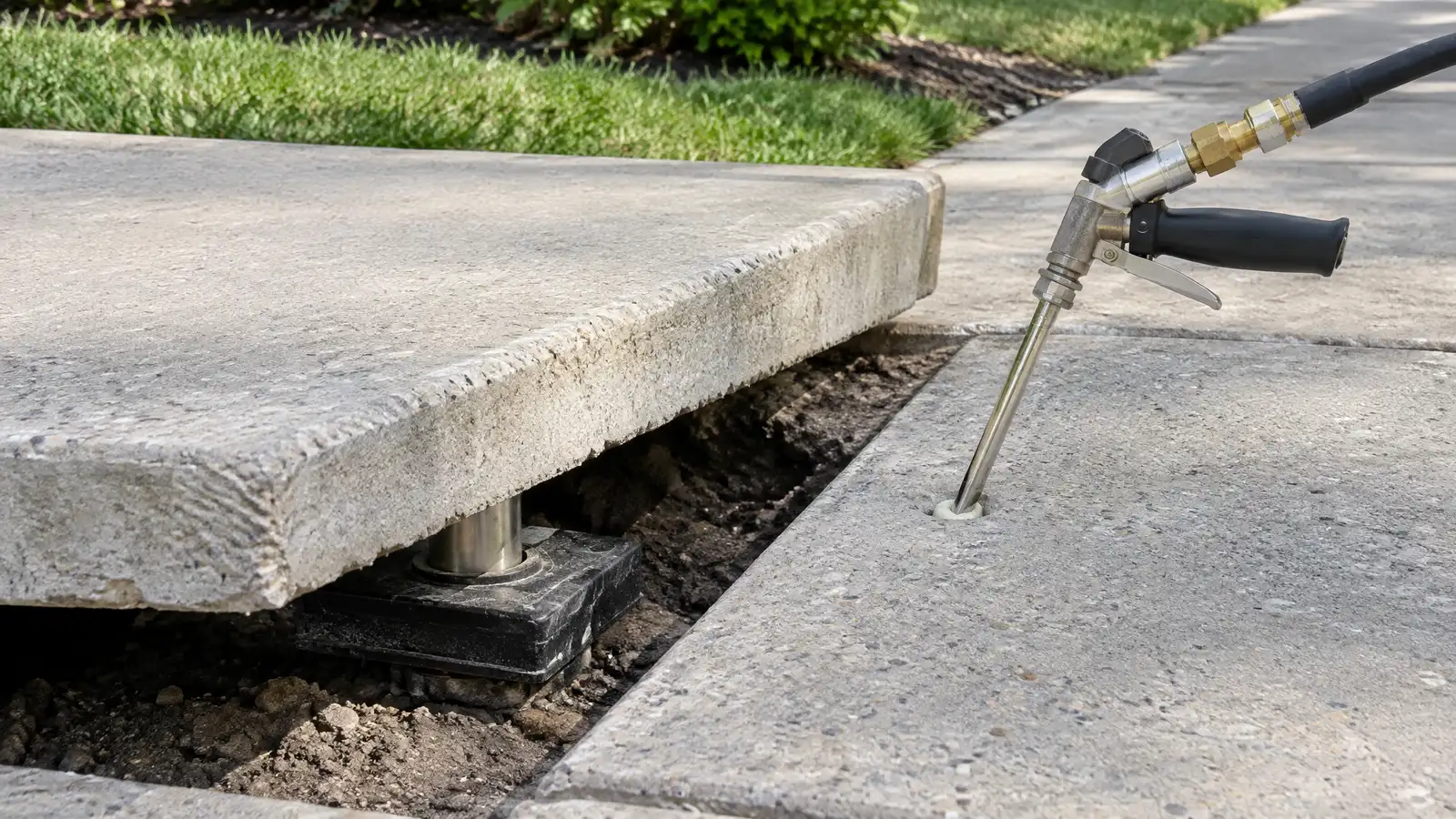 Polyurethane Foam Concrete LiftingLightweight expanding foam injected under sunken concrete to fill voids, lift the slab and stabilize it with minimal…Explore
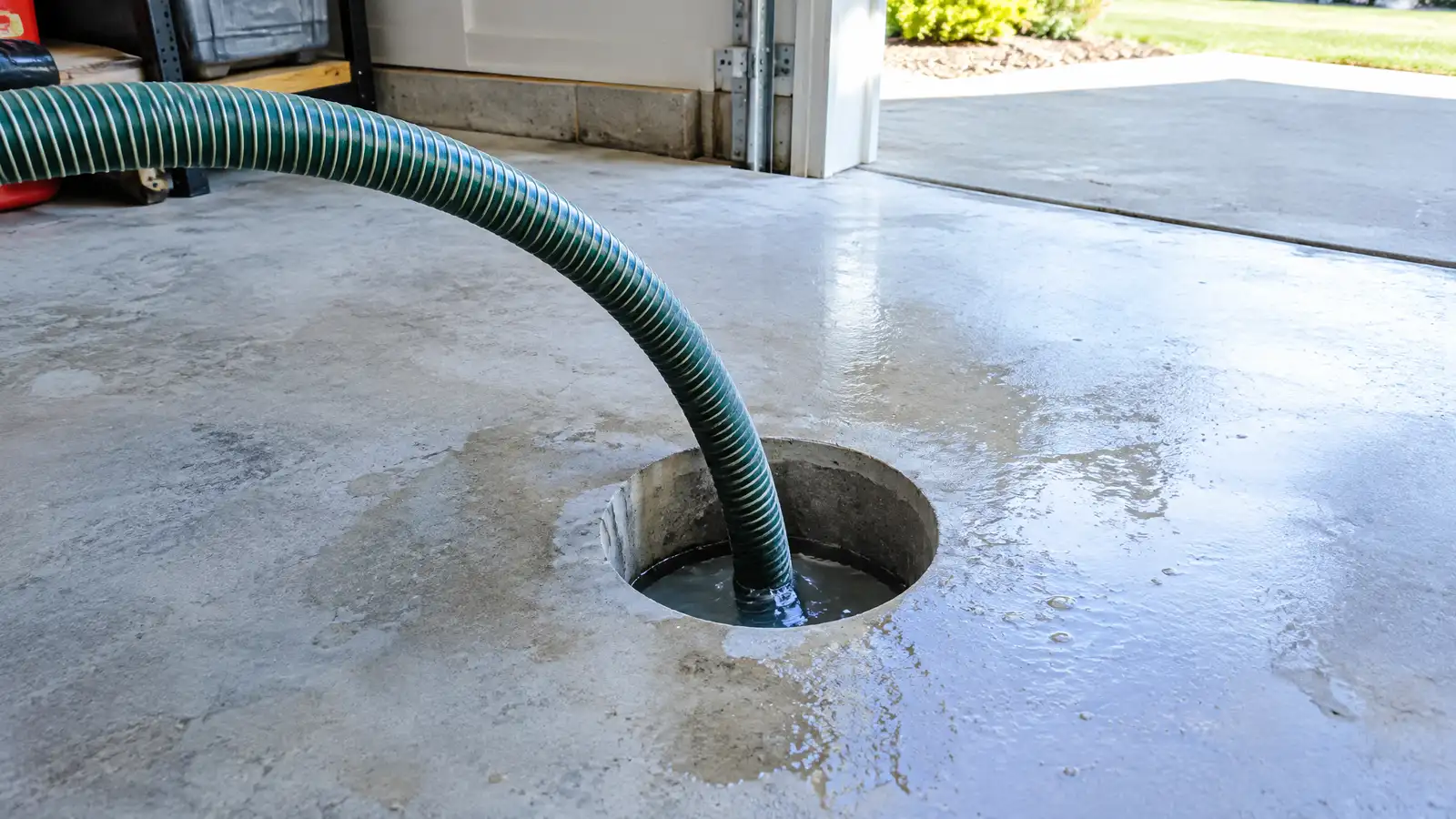 Void Filling Under SlabsFinding and filling hidden gaps beneath concrete floors, steps, garages and slabs to restore support.Explore
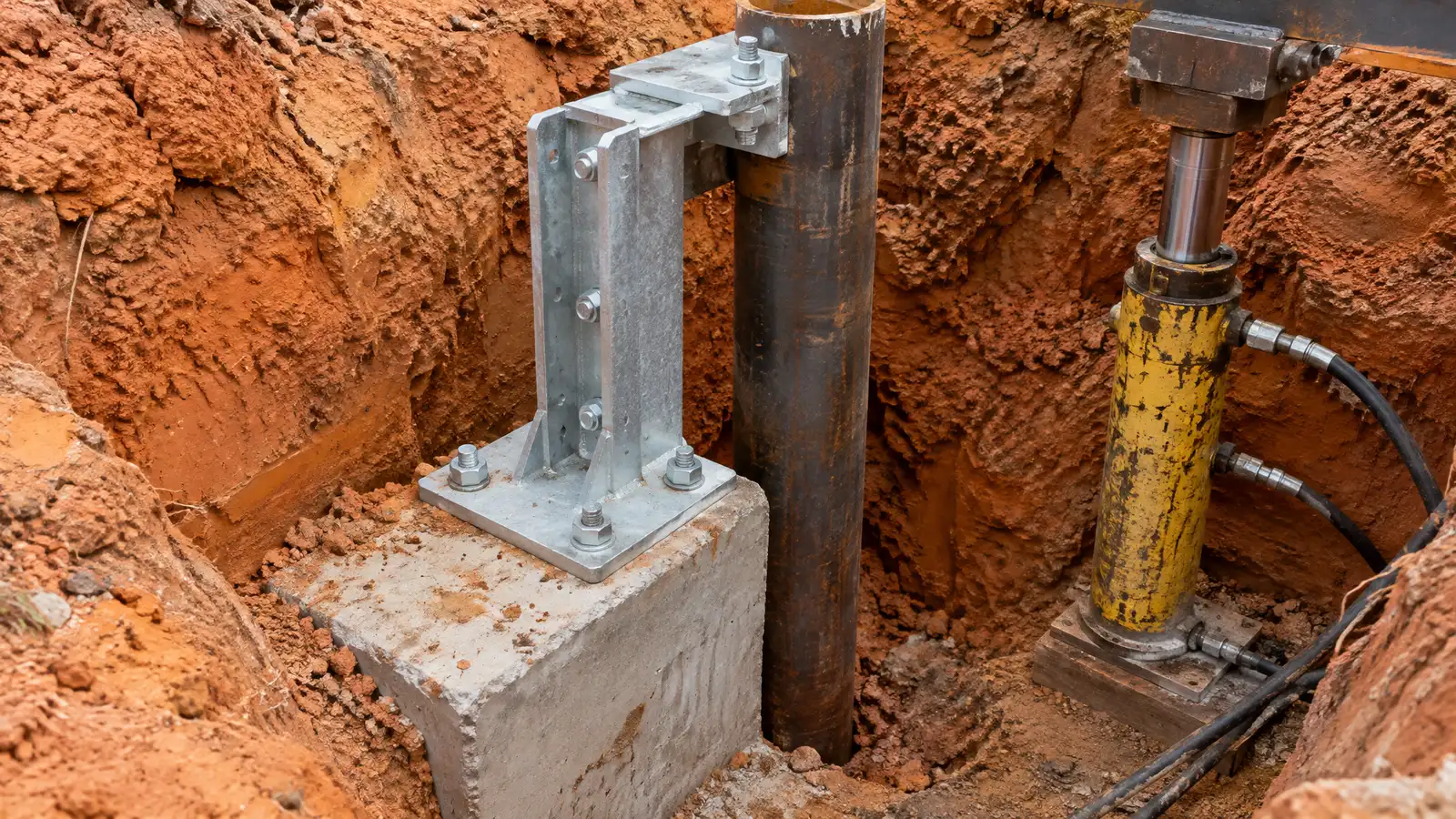 Push Pier Foundation RepairSteel push piers driven down to firm support to stop settlement and, where practical, lift a sinking foundation…Explore
Tell us about your property and one specialist will call you back to set up a visit.
Or call (615) 431-3789 to talk now.