Start at the roof
A roof sheds a lot of water in a storm, and all of it ends up near the foundation unless it is sent away. Clean gutters, secure hangers and downspouts that carry water well away from the wall are the first line of defense.
Overflowing gutters are one of the most common causes of wet crawl spaces.
Clean gutters from a ladder safely, or hire help. Gutter guards can help with leaves, and they still need checks.
Downspout discharge
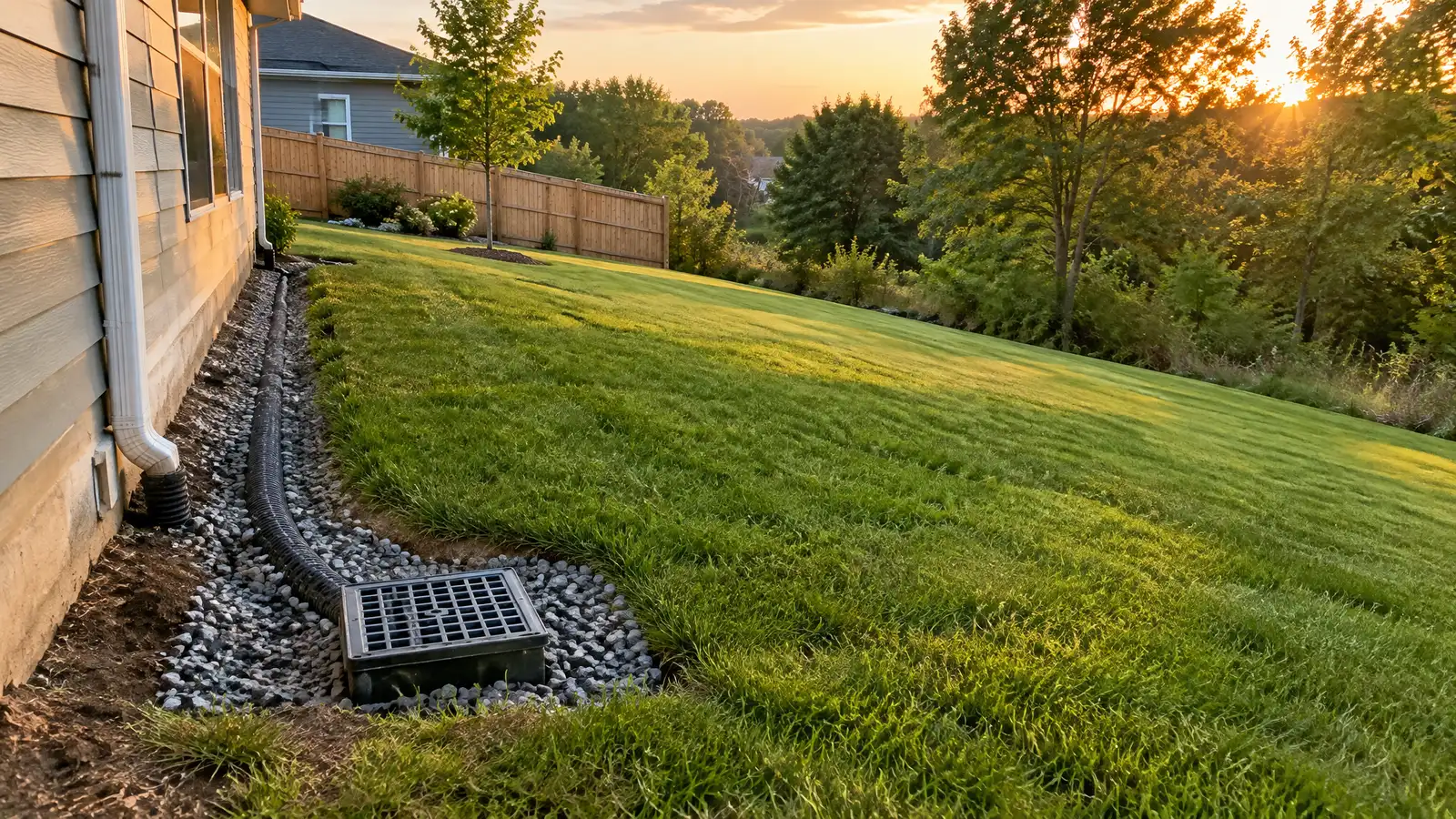
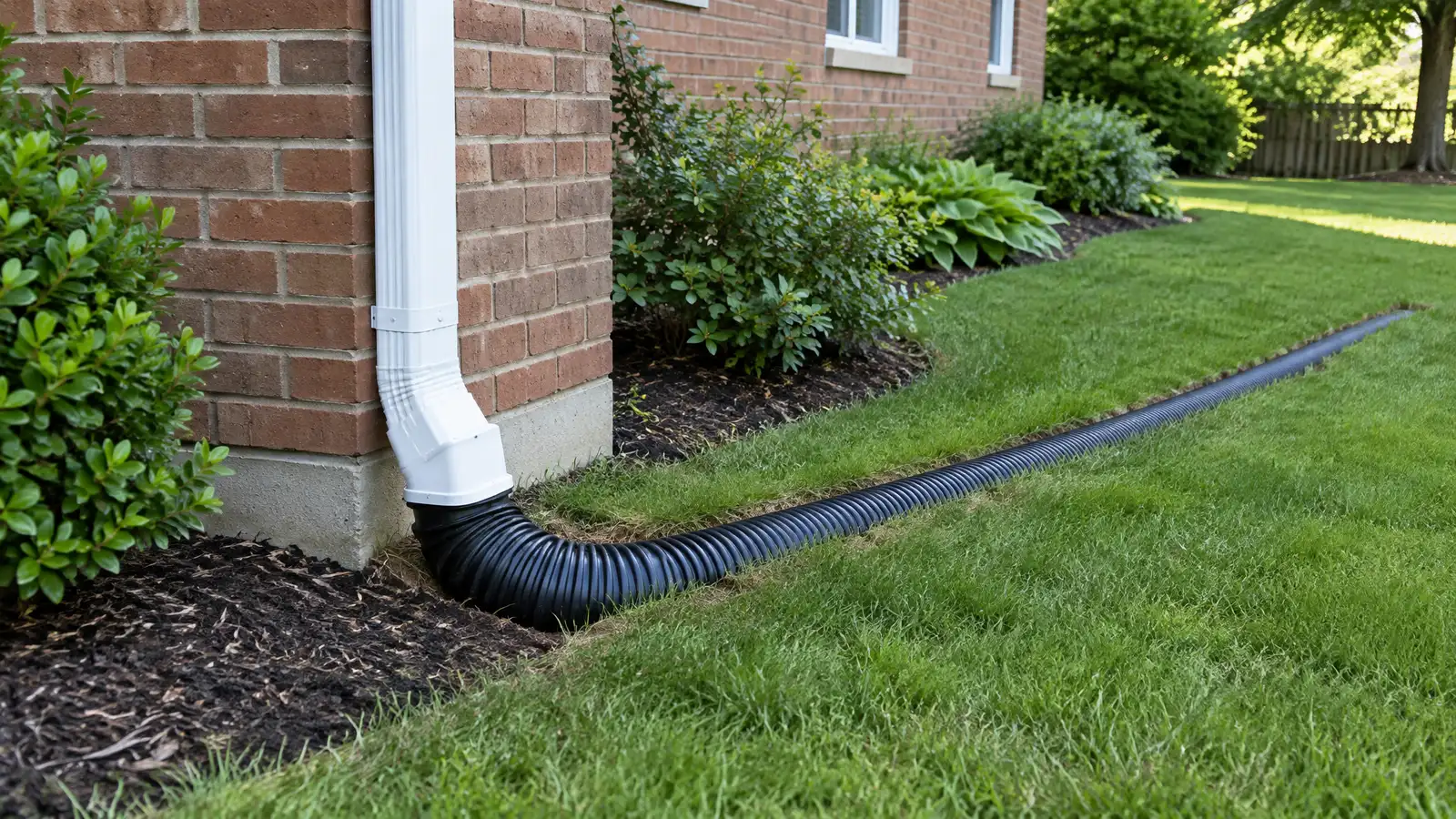
Extensions, splash blocks and buried lines move water away from the house. Aim for the discharge to land well beyond the foundation and on ground that slopes away.
Check that buried lines have an outlet and are not blocked.
A hose on a downspout is a quick way to see where water goes and whether the pipe is clear.
Grade the soil
The ground beside the house should slope away. Over time soil settles and mulch builds up, and the slope can reverse. Add compacted soil to restore it, keeping siding and vents clear.
A little slope goes a long way.
Use compacted fill to rebuild the grade, not loose topsoil that will wash away. Keep soil below siding.
Drains for what is left
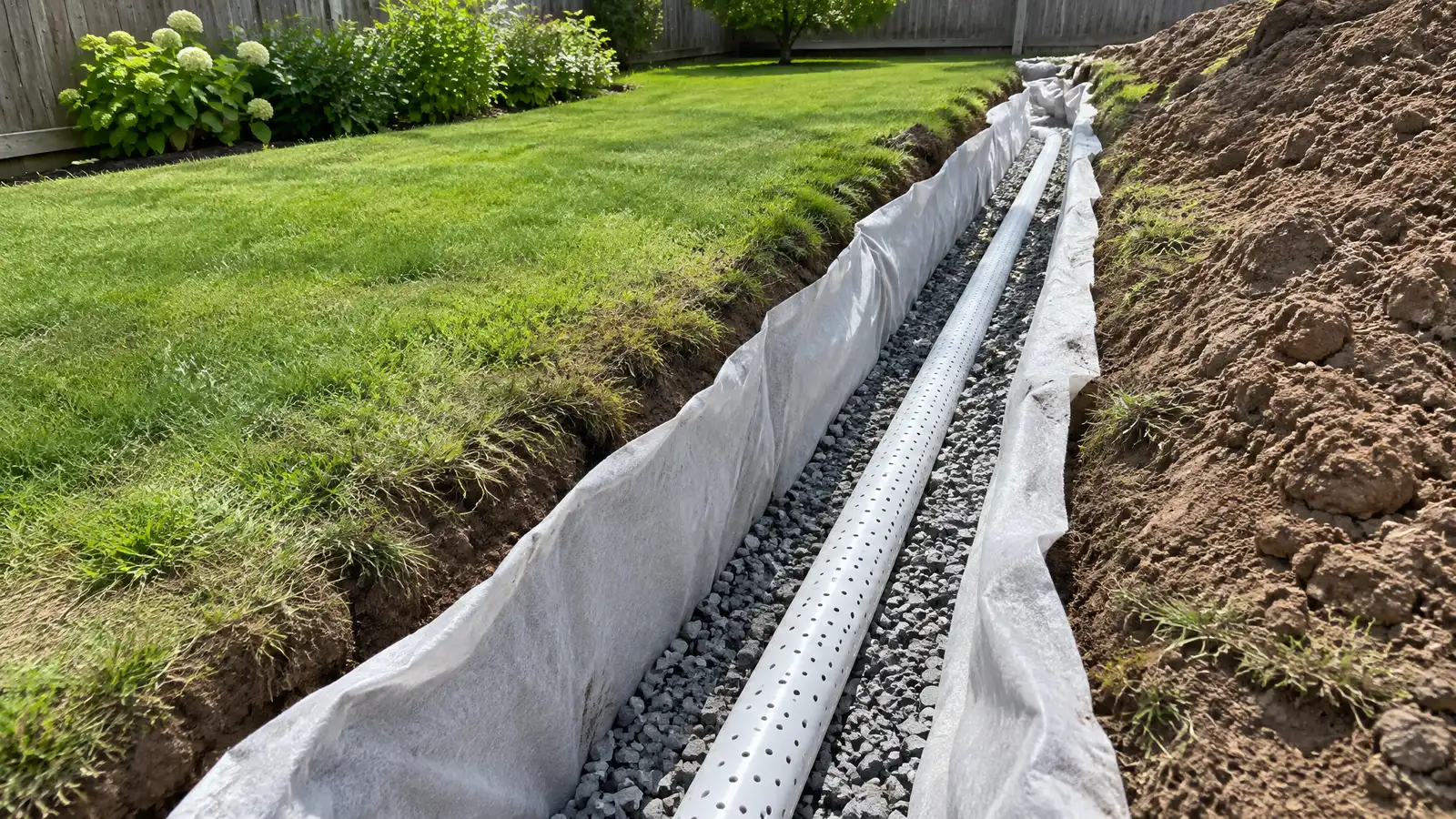
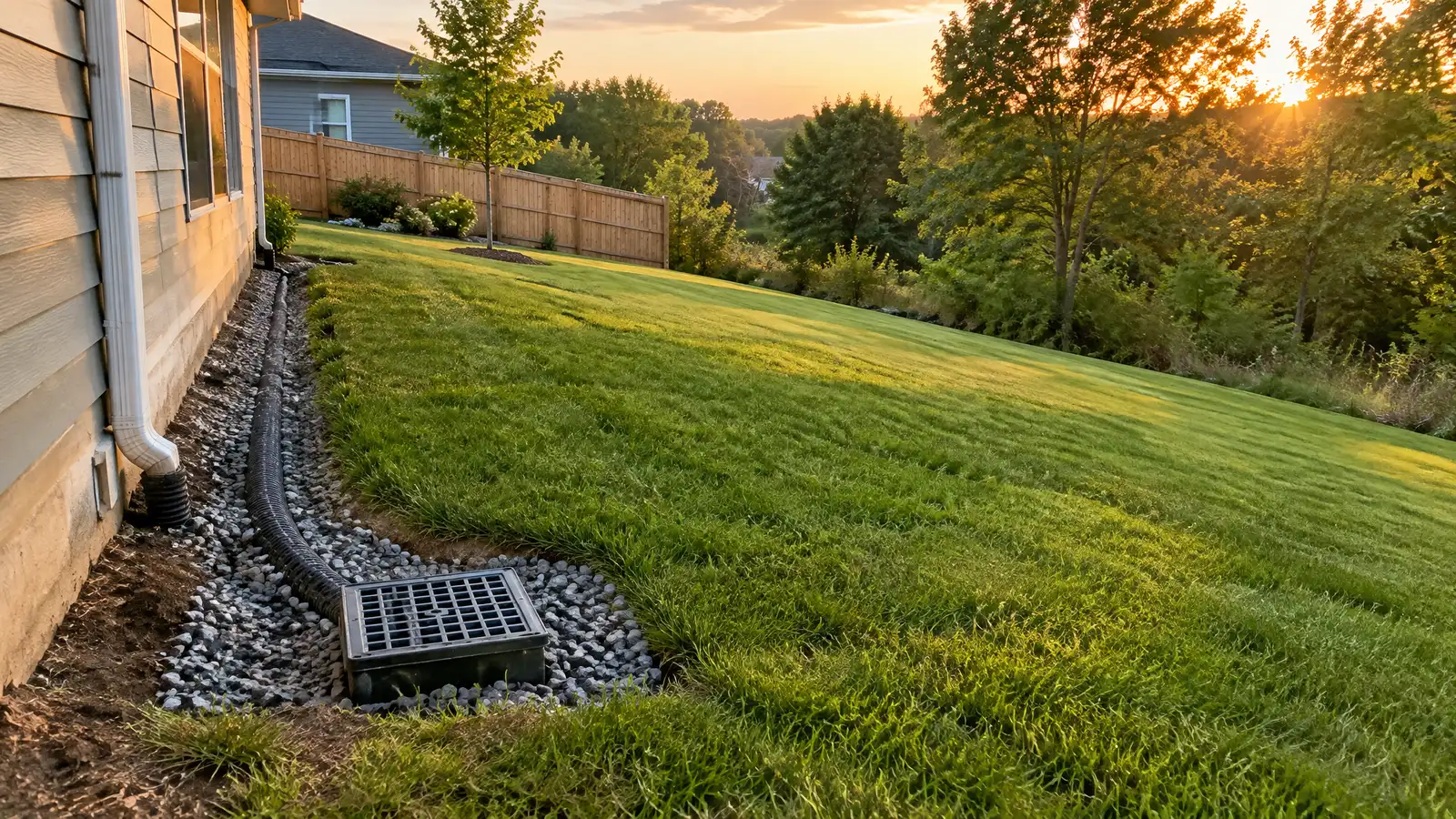
French drains, surface drains and dry wells handle water that gutters and grading do not. Each needs a safe outlet, and a plan keeps the pieces working together.
Drains also need occasional cleaning.
Ask where the outlet will be. A drain without an outlet fails.
Mind the neighbors
Water should not be pushed onto neighboring properties. A good plan respects lot lines and local rules, and your specialist explains what is common.
Walk the yard during a storm and watch where the water goes.
A storm walk with a notebook is the cheapest drainage study you can do.
Move roof water far away, slope the ground away from the walls and give every drain a safe outlet.